Pesce Spada alla Napoletana
A true Neapolitan classic — sea and land on one plate
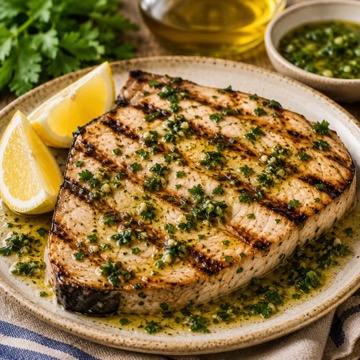
The other swordfish. My mother made both — the grilled version with pinzimonio was our favorite, but this one was its equal in a different way. Pan-cooked, the swordfish surrounded by cherry tomatoes, Gaeta olives, capers, and oregano, everything combining in the pan in ten minutes into something that tastes like Naples in a single bite.
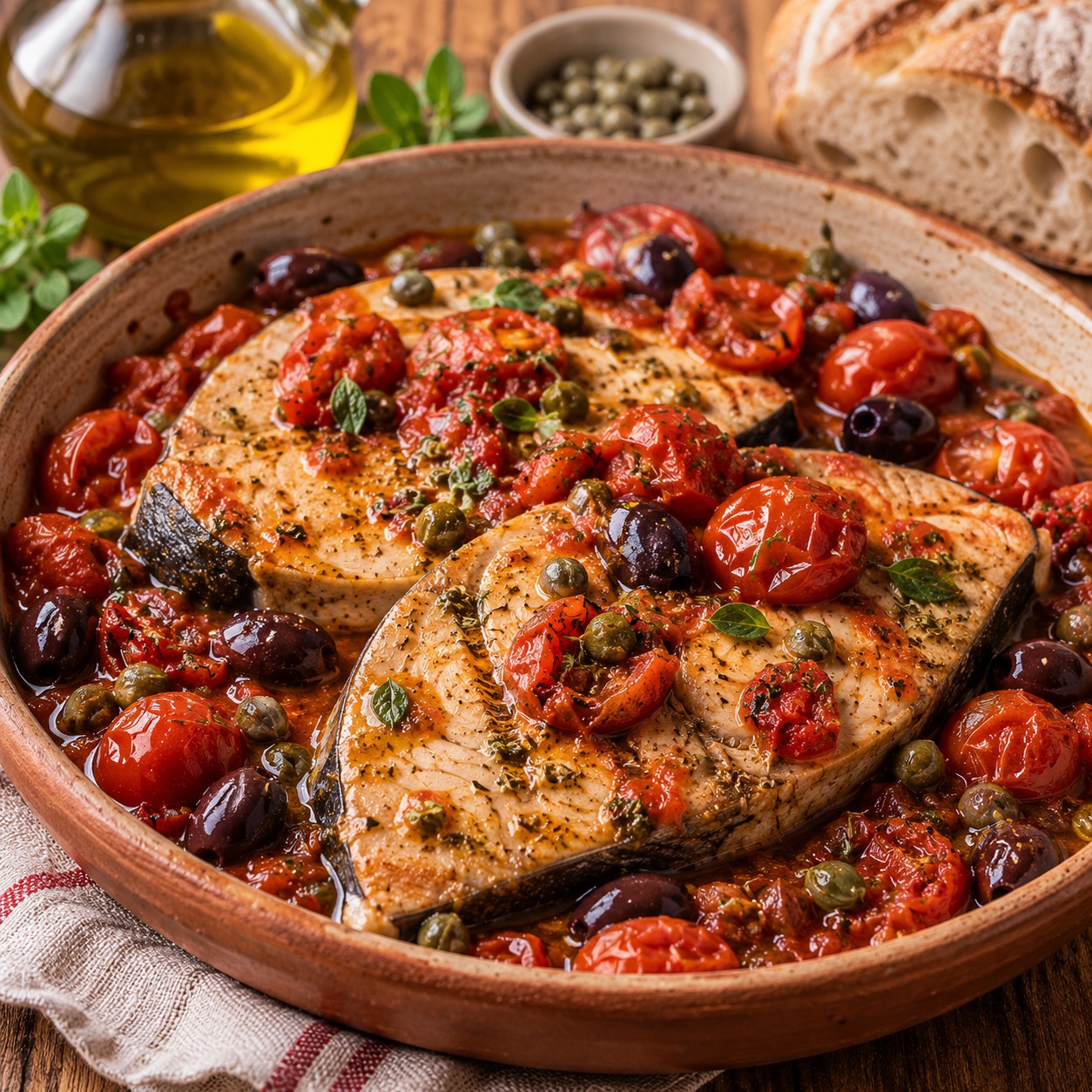
The swordfish alla napoletana belongs to the category of dishes that demonstrate what Neapolitan cooking at its best is actually doing: taking fresh, quality ingredients, applying high heat for a very short time, and producing something that is greater than the sum of its components without any of those components being obscured or overwhelmed. The cherry tomatoes collapse in the hot pan and release their juice into the olive oil. The Gaeta olives give their brine and their bittersweet depth. The capers add acid and the specific pungency of their caper glucosinolates. The oregano — a small amount, dried, added early — provides the Mediterranean herbal note that ties everything together. The swordfish itself arrives into this environment and cooks in four minutes per side, absorbing the flavors of the sauce while giving its own into the pan. The result is a unified dish, not a fish with a topping.
My mother made this on the evenings when she wanted the sauce — when she wanted something to put bread into at the end. The pinzimonio version, which was our family's declared favorite, was lighter, more immediate, more about the fish alone meeting the herb oil. The napoletana version was richer, rounder, more complete: the tomato acidity against the olive brine against the fish's natural sweetness, all in one plate that arrived from the kitchen smelling of the sea and the garden simultaneously. These are not competing recipes. They are two correct answers to the same fish, one for when the grill is right and the evening is hot, one for when the pan and the sauce are what the meal calls for.
The Gaeta olives are not optional in this preparation — the infographic says it directly, and it is correct. Gaeta olives are small, black, soft-cured olives from the town of Gaeta on the southern Lazio coast, with a flavor that is simultaneously briny, slightly bitter, and fruity in a way that the firm, neutral green olives that dominate the American market are not. They soften further in the hot pan and release their brine into the tomato sauce, contributing a specific depth that no other olive variety produces in the same way. If Gaeta olives are genuinely unavailable, a Kalamata is the closest substitute — also soft-cured, also black, also with sufficient character to hold its own in the sauce. A pitted green olive is not a substitute.
The optional anchovy fillets in the soffritto — mentioned in the infographic and correct — are worth including when you want the sauce to have additional depth without adding any identifiable anchovy flavor. One or two fillets dissolved in the olive oil at the beginning of the soffritto contribute glutamate-rich umami to the base that raises the entire sauce without announcing their presence. This is a technique common throughout Neapolitan and southern Italian cooking: the anchovy as a seasoning agent rather than as an ingredient. My mother used it selectively — sometimes yes, sometimes not — depending on the fish and on how strong the cherry tomatoes were that week.
Swordfish has a water content of approximately 74% and a fat content of around 4% — lean but not as lean as white fish, with enough fat to remain moist under brief high-heat cooking. The key variable is time: swordfish muscle proteins denature rapidly above 50°C and the narrow window of juicy, tender texture (internal temperature 52–58°C) is reached in 3–4 minutes per side on a hot pan. Beyond this window, the proteins continue denaturing and begin expelling water from the muscle fibers — the fish becomes progressively drier and firmer with each additional minute of cooking. The sauce environment in the napoletana preparation helps: the cherry tomato liquid and the olive brine released into the pan create a slightly humid environment that slows moisture evaporation from the fish's surface during the brief cooking period. The one-minute rest off the heat — with the fish remaining in the warm sauce — allows carryover cooking to finish the interior gently without the surface overcooking further. The anchovy dissolved in oil is a demonstration of glutamate chemistry: anchovy tissue contains very high concentrations of free glutamate (the amino acid that activates the umami taste receptors on the tongue) as a result of the fermentation or maturation process in its production. When dissolved in hot olive oil, the glutamate disperses into the fat phase of the sauce and then distributes throughout the aqueous phase (tomato juice, olive brine) as the sauce develops, raising the perceived savory depth of the entire preparation without any identifiable fish flavor from the quantity used. One or two fillets is below the threshold of identifiable anchovy taste but above the threshold of meaningful glutamate enhancement.
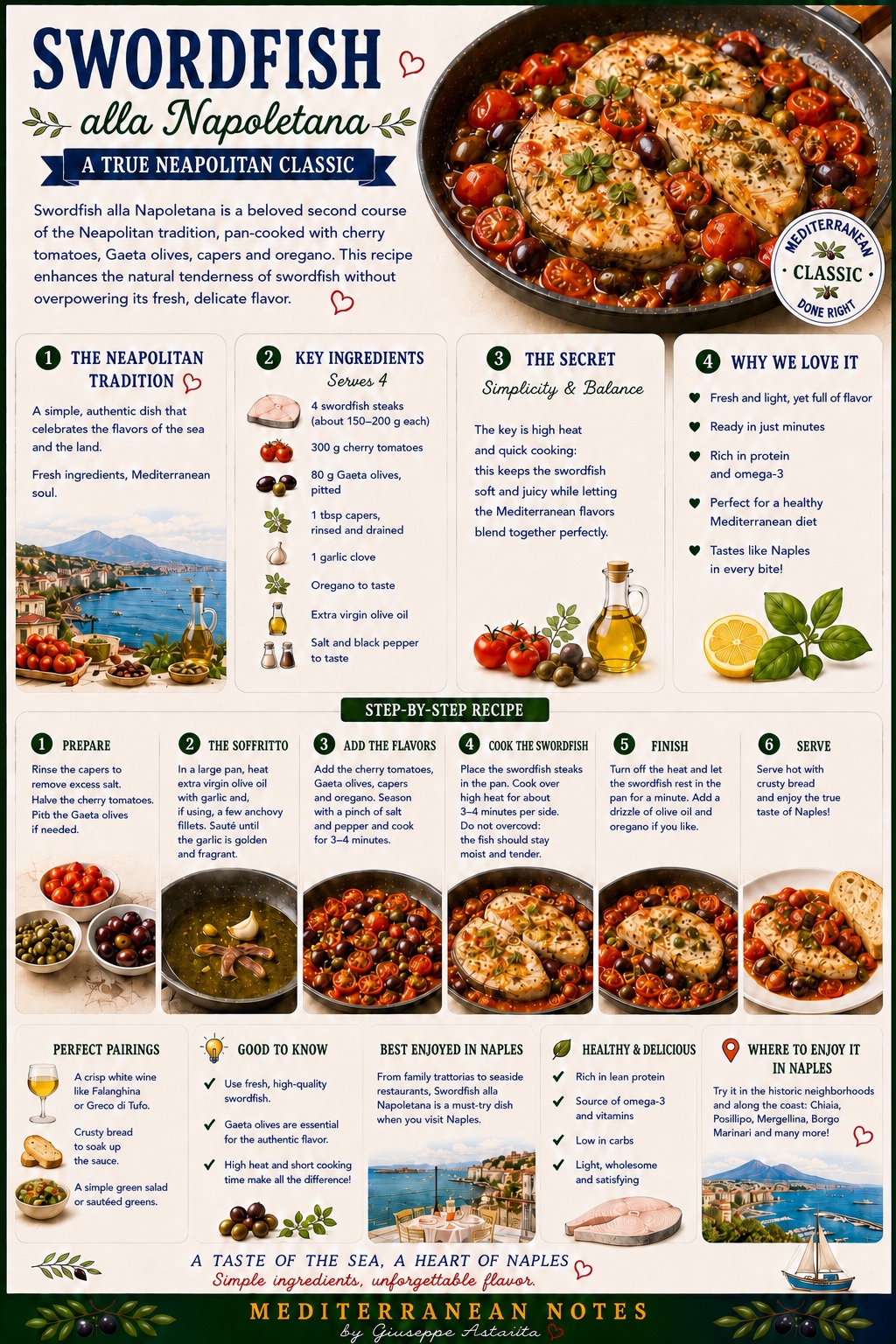
La ricetta
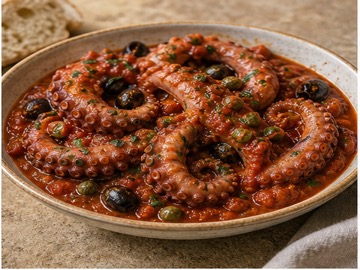
The bread for the sauce at the end of this meal is not optional in the same way it is not optional after the polpo alla Luciana or the spigola all'acqua pazza. The sauce that forms in the pan — concentrated cherry tomato juice, olive brine, olive oil, the juices released by the fish during cooking — is itself worth eating, and the bread is the instrument for eating it. My mother served the pan at the table sometimes, which made this easier. Everyone took what they wanted from the pan with their bread, which was not a failure of plating but a correct understanding of what the meal was.
Buon appetito — e il pane per la salsa è obbligatorio.