Pasta, Ricotta e Melanzane
The creamy summer pasta — fried eggplant, tomato, and ricotta whipped smooth
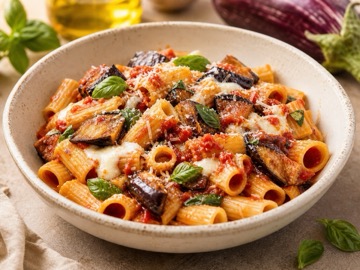
Fried eggplant and a quick tomato sauce, finished off the heat with ricotta loosened into a cream with a ladle of pasta water. It is the Campanian cousin of Sicily's pasta alla Norma — same eggplant-and-tomato foundation, but softened and made richer with fresh ricotta. My mother made it constantly in summer, when the eggplants were at their best.
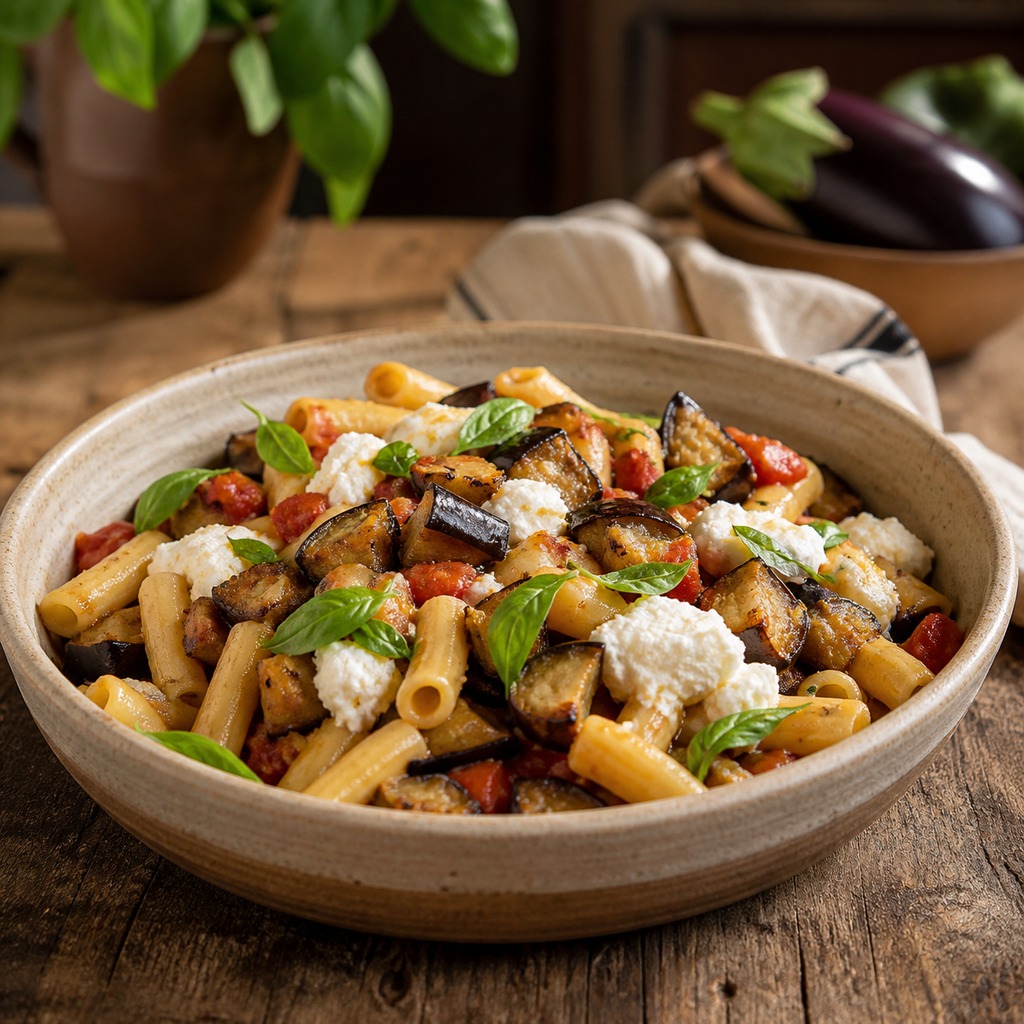
This is a summer dish, and an eggplant dish, which in Campania means the same thing. When the melanzane come in — the long firm purple ones, heavy for their size — there is a rotation of dishes the kitchen moves through, and this is one of them: faster than a parmigiana, richer than a plain pasta con melanzane, and creamy in a way that comes not from cream but from ricotta. My mother made it often, and I make it now in the summer when I have eggplants to use.
It is worth being honest about where it comes from. The ancestor of this dish is Sicilian — pasta alla Norma, the Catanese classic of fried eggplant, tomato, basil, and salted ricotta over pasta, named (the story goes) for Bellini's opera. What happens in Campania is a softening: instead of only grating hard ricotta salata over the top, you whip fresh ricotta vaccina into a cream and fold it through the pasta off the heat, so the whole dish turns silky and mild. The Sicilian version is sharper and drier; the Campanian one is creamier and rounder. Both are correct. This is the one I grew up with.
The method has three separate parts that come together at the end: the eggplant, fried in cubes until golden and set aside; a simple tomato sauce with garlic and basil; and the ricotta, loosened with starchy pasta water into a pourable cream. You cook the pasta, toss it in the tomato with most of the eggplant, then kill the heat and fold in the ricotta cream and torn basil. The ricotta must go in off the heat — overheated, it turns grainy and splits. Folded in warm, it stays glossy and coats every paccchero.
She would sometimes finish it both ways at once — the fresh ricotta folded through for creaminess, and a little ricotta salata grated over the top at the table for a salty, sharp counterpoint. That is closest to the Sicilian original, and it is very good: the mild cream underneath, the sharp salt on top, the fried eggplant in between. Use whichever you have. The dish is forgiving and was never made the same way twice.
Eggplant is a sponge of air pockets — its flesh is mostly empty cellular structure — which is why it drinks oil so readily and why, fried correctly, it turns silky and concentrated rather than greasy. Frying at a high enough temperature (175–180°C) sets the surface quickly, collapses the air pockets, and drives off water through Maillard browning, concentrating the eggplant's flavor into something deep and almost meaty. Fried too cool, the cubes absorb oil without browning and turn heavy; this is why the traditional version insists on plenty of hot oil and why draining on paper afterwards matters. The lighter pan-sautéed version trades some of that depth for less fat — both work, but they are genuinely different in character.
The ricotta cream is the step where the dish is won or lost. Ricotta is not really a cheese but a re-cooked whey product, a loose network of whey proteins (mostly albumins and globulins) holding water. Those proteins denature and tighten at relatively low heat: stirred into a hot pan over the flame, they contract and expel their water, and the smooth cream breaks into grainy curds swimming in liquid. Folded in off the heat, loosened first with starchy pasta water, the proteins stay relaxed and the starch from the water helps emulsify the whole thing into a stable, glossy sauce that clings to the pasta. The rule is simple: flame off, then ricotta.
The recipe
For four. Paccheri or rigatoni are the right shapes — big and ridged, they hold the cream and catch the eggplant. Use firm, glossy eggplants and good fresh ricotta vaccina. The tomato can be passata or fresh cherry tomatoes; in high summer the cherry tomatoes are better. Keep a cup of pasta water back — you need it for the ricotta cream.
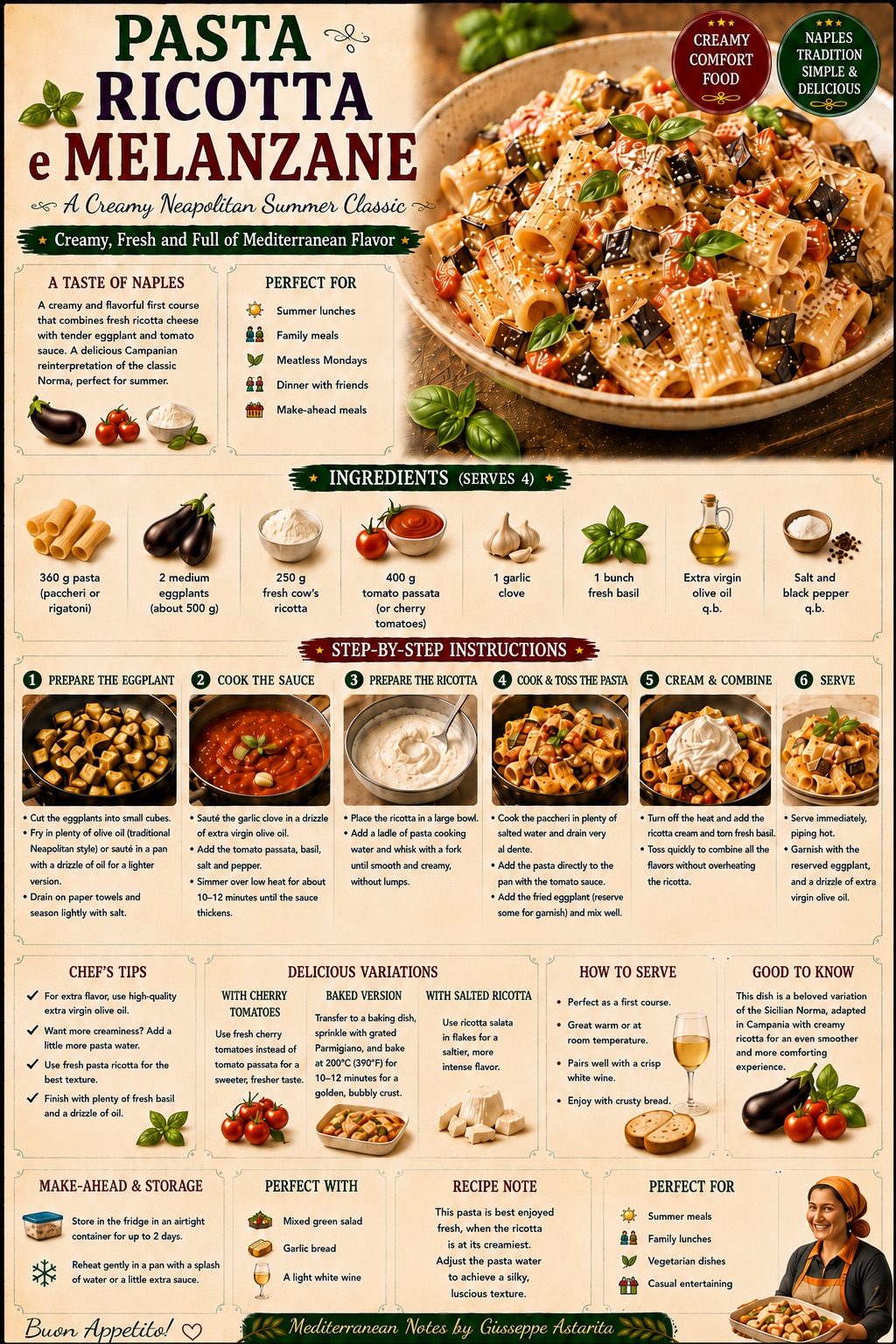
Variations
Best enjoyed fresh and hot, though it holds for a day in the fridge — reheat gently with a splash of water to bring the ricotta cream back. It is, at heart, what summer eggplant becomes when you want something creamy and comforting without lighting the oven for a whole parmigiana.
Buon appetito — e viva le melanzane d'estate.