Involtini di Melanzane
alla Napoletana
Eggplant rolled around mozzarella, tomato, and basil — my mother's party dish
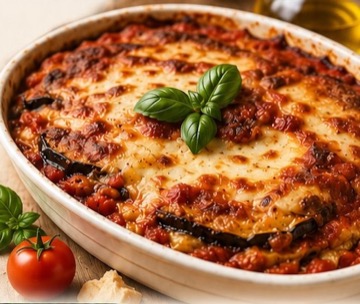
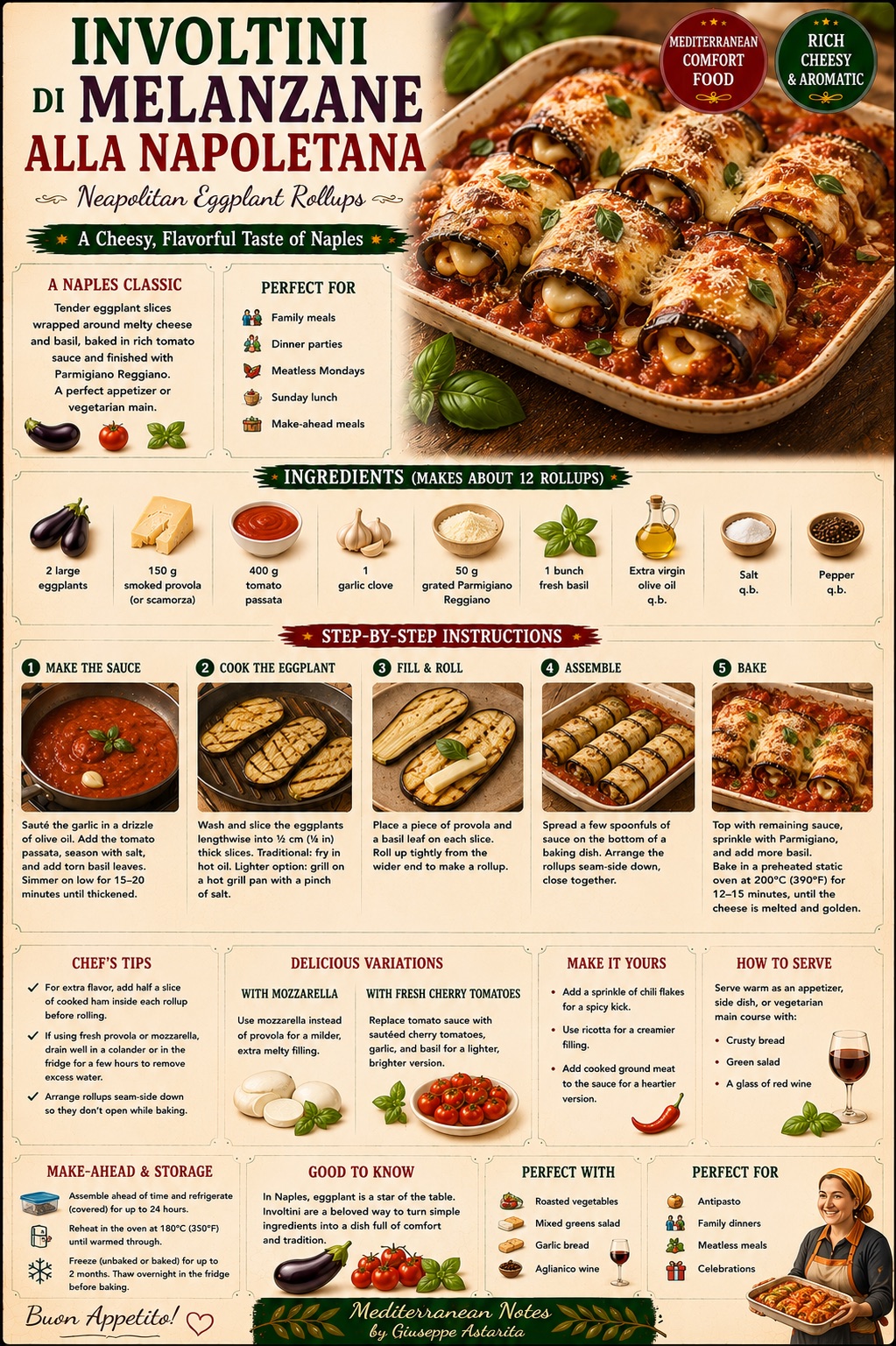
Slices of eggplant, grilled or fried, rolled around mozzarella, a piece of cherry tomato, and a basil leaf, then laid in tomato sauce, sprinkled with Parmigiano, and baked until the cheese melts and the tops gratinate. My mother made these whenever there was a party — and growing my own eggplants now, in summer, brings the whole thing back.
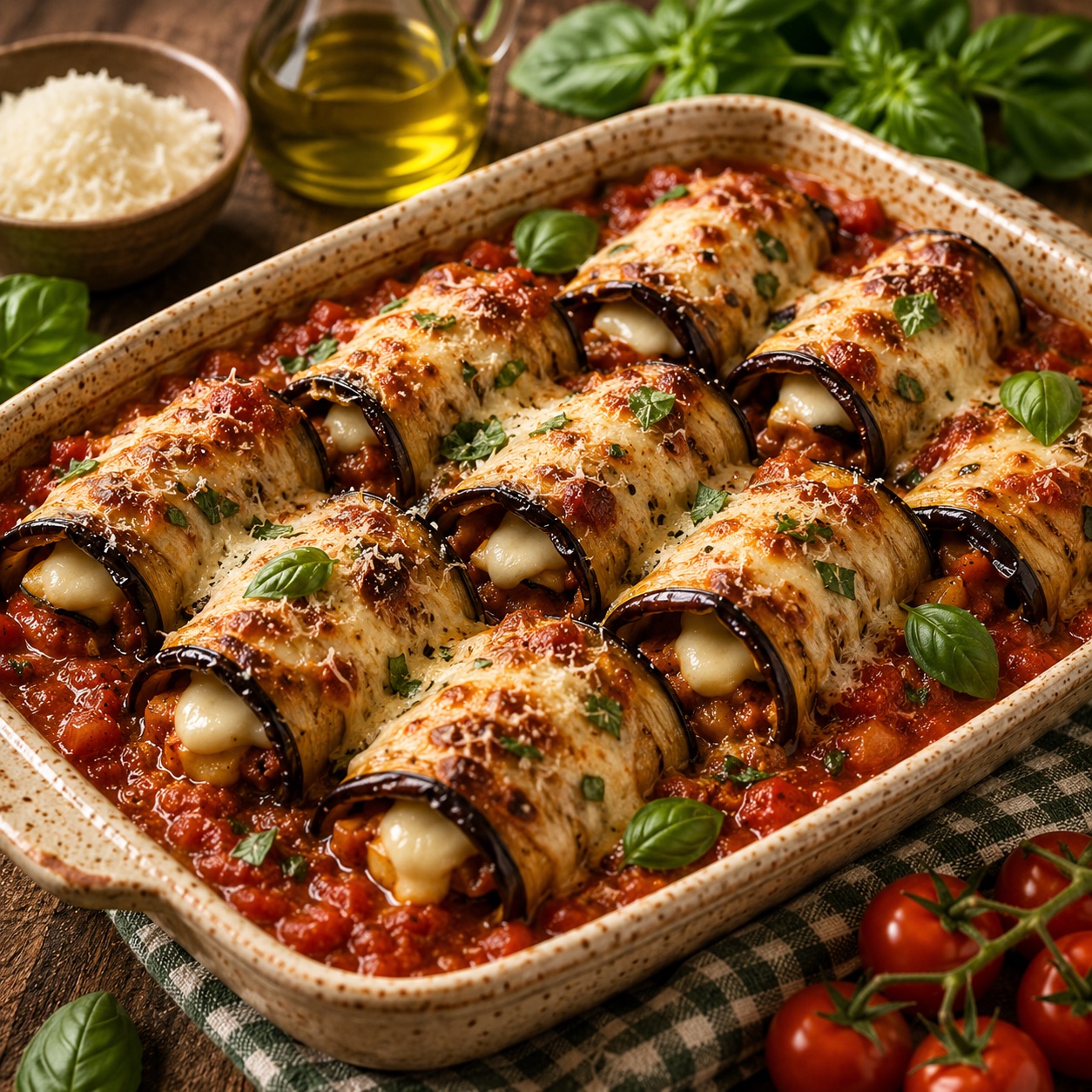
These are a party dish in my memory before they are anything else. When my mother was cooking for a gathering — people coming over, a summer table that needed more than the everyday — the involtini di melanzane were one of the things she made. They are a little more work than a parmigiana in the rolling, but they plate beautifully, one neat roll per person or several to share, and everyone loves them. Eggplant, mozzarella, tomato, basil, baked together: the whole summer in a single bite.
My mother's way was the lighter one. She did not deep-fry the slices — she grilled them, arrostite, or baked them in the oven first, until they were soft and pliable and could be rolled without breaking. Then inside each slice went mozzarella, a piece of pomodorino, and a leaf of basil; she rolled them up, lined them in the dish, and gratinéed them in the oven. The frying version exists and is richer, but the grilled version is hers, and it is the one I make. Growing my own eggplants now in the summer garden, I find myself making them the way I watched her make them, without ever having been formally taught.
There is a base version and her version, and both are on this page. The base — closer to what you will see written down as the Neapolitan standard — rolls the eggplant around smoked provola and bakes it in a simple tomato sauce. Hers used fresh mozzarella with a piece of cherry tomato and basil tucked in alongside it, which is brighter and more summery. Use what you like: provola melts deeper and smokier, mozzarella is milder and more molten. Either way the eggplant must be cooked soft first, and the cheese must be well drained, or the rolls weep water into the dish.
They work as an antipasto, a contorno alongside something else, or a vegetarian main with bread and a salad. Warm is best — straight from the oven, the cheese still molten — but they are also good at room temperature on a hot day, which is part of why they suit a party: you can make them ahead and they do not punish you for it.
An eggplant slice cannot be rolled raw — it snaps. Cooking it first, whether grilled or fried, does two things: it collapses the rigid, air-filled cell structure so the slice becomes flexible, and it drives off some of the water held in that spongy flesh. Grilling on a hot griddle does this with almost no oil, charring the surface and softening the interior through steam from the eggplant's own moisture; frying does it faster and adds richness as the flesh absorbs oil. Either way you are converting a stiff raw slice into a pliable one that can wrap around a filling without cracking — and concentrating its flavour as water leaves.
The filling's worst enemy is water. Fresh mozzarella and provola both hold a great deal of it, and if you roll it in straight from the packet, that water is released as the cheese melts in the oven and pools in the dish, leaving the involtini sitting in a thin, watery sauce. Draining the cheese first — in a colander, or a few hours in the fridge — lets that whey escape before baking, so what melts inside the roll is concentrated, stretchy cheese rather than a leak. The same logic applies to the cherry tomato: a small piece, not a wet slice, so it adds sweetness and acidity without flooding the roll.
The recipe
Makes about 12 rollups. Use large eggplants so the slices are wide enough to roll. The classic filling is smoked provola; my mother's is fresh mozzarella with a piece of cherry tomato and basil — both are given below. Whichever cheese you use, drain it well first. Slice the eggplant lengthwise, about ½ cm thick, so it bends without breaking.
Variations
They can be assembled ahead and refrigerated, covered, for up to a day, then baked when you need them — which is exactly why they suited a party. They also freeze well, baked or unbaked, for a couple of months; thaw overnight in the fridge before baking. Serve them warm as an antipasto, a side, or a vegetarian main, with bread and a green salad.
Buon appetito — e viva le melanzane d'estate.