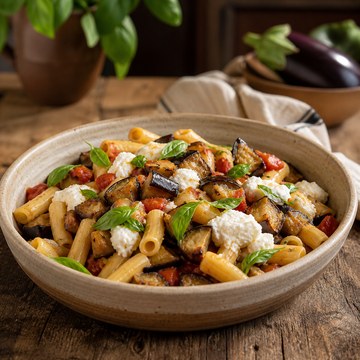
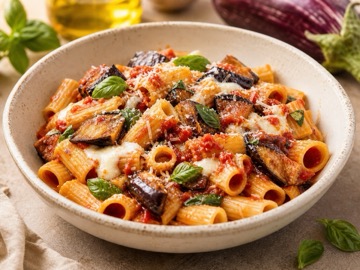
Pasta con Melanzane
e Mozzarella in Bianco
No tomato — just eggplant, melting mozzarella, and a lot of big basil leaves
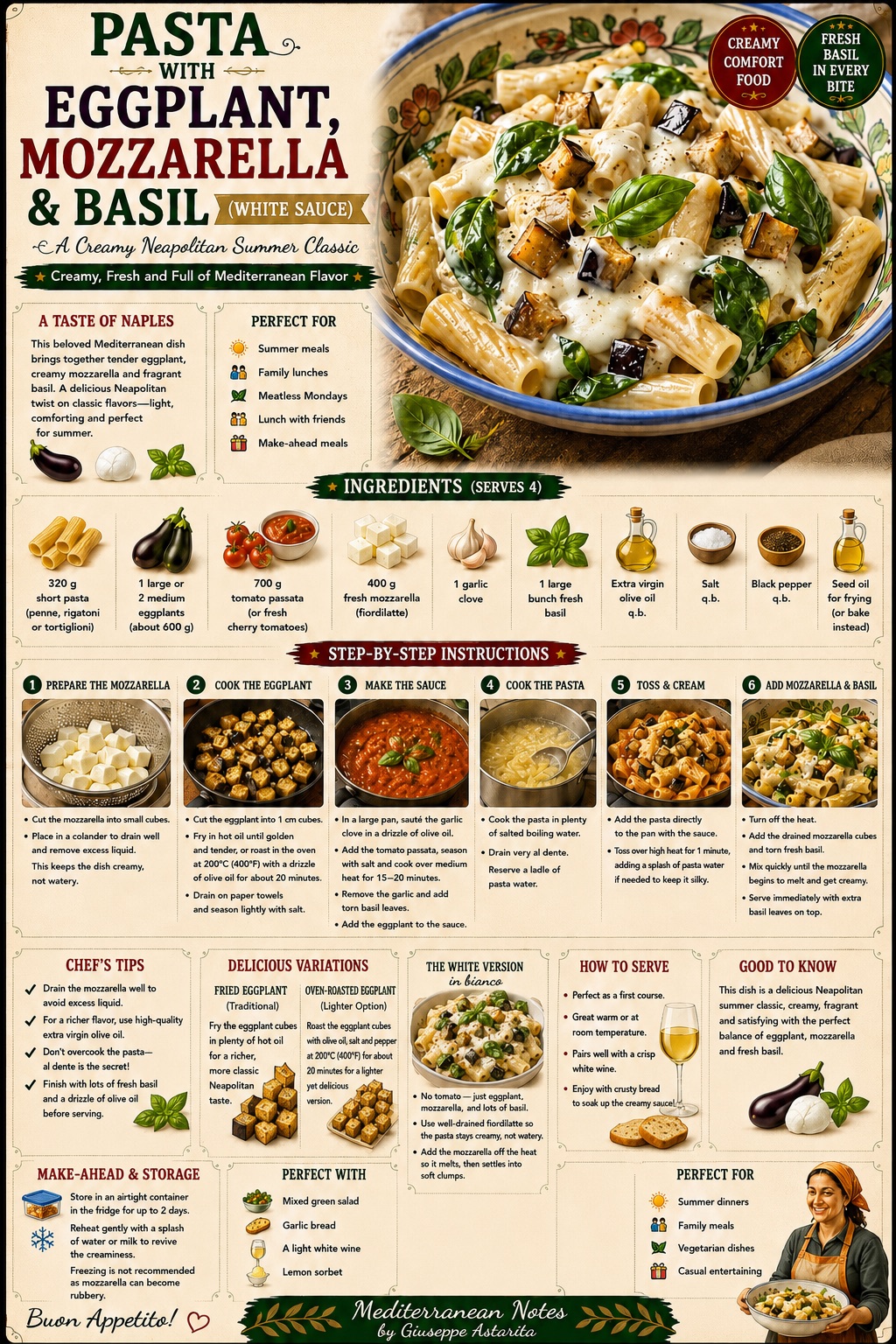
Golden eggplant, plenty of fresh mozzarella that melts into strings and then crumbles together as it cools, and a great many large basil leaves torn in at the end. No tomato — this one is in bianco, white, which is what makes it different. It is the combination I remember most: basil and molten mozzarella, nothing competing with them.
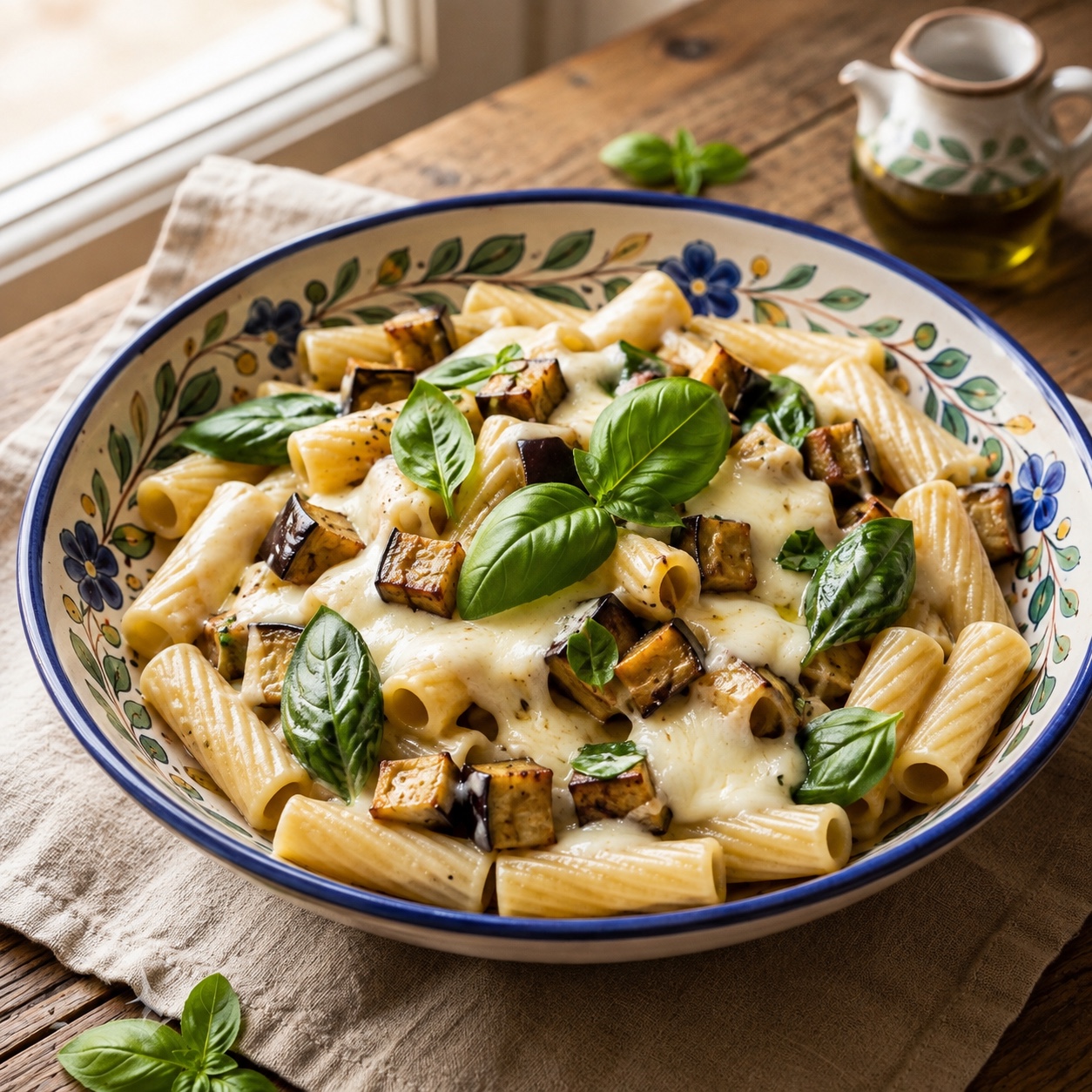
I want to be honest about this one: I am not sure it is properly Neapolitan. The Campanian versions of pasta with eggplant and mozzarella almost always involve red sauce — tomato is nearly always there, as it is in the ricotta-and-eggplant pasta or in pasta alla Norma. This is something else. It is in bianco — no tomato at all — and I cannot tell you it comes from a tradition with a name. What I can tell you is the taste, which has stayed with me: the specific combination of basil and pieces of mozzarella that had melted and then, as the dish cooled a little, crumbled and clumped back together. That is the thing I am chasing when I make it.
Without tomato, there is nowhere to hide, and the three ingredients have to be good. The eggplant is cooked until golden and a little caramelized — fried in the traditional way, or roasted in the oven for something lighter — so it brings sweetness and a faintly smoky depth. The mozzarella has to be real fiordilatte, well drained, and used generously: not a polite scattering but a proper amount, so that it melts and ropes through the hot pasta. And the basil should be the big leaves, lots of them, torn by hand at the very end so the heat releases the smell without cooking it away. Olive oil, garlic, salt, pepper, a little starchy pasta water to bring it together. That is the whole thing.
The trick — the only real technique here — is the mozzarella going in off the heat. Stir it into the hot, just-drained pasta with the flame off, and it melts into strings; let the dish sit a moment and the strings firm and crumble into soft clumps, which is exactly the texture I remember. Too much heat and it turns to rubber and weeps water; drained well and added warm, it stays tender. Lots of basil, a thread of good oil over the top, and it goes to the table immediately.
Fresh fiordilatte is stored in liquid and holds a great deal of water within its protein structure. Stirred into pasta straight from the tub, that water is released as the cheese warms and thins the dish into something watery and pale. Cutting it into cubes and letting it drain in a colander — ideally cut the night before and rested in the fridge — lets much of that whey escape first, so what melts into the pasta is concentrated, stretchy cheese rather than a leak. This is the single step that separates a glossy dish from a soupy one.
Mozzarella is a pasta filata cheese: its proteins are aligned into stretchy fibres during stretching. When it heats past about 60°C those fibres loosen and flow — the molten, roping stage. As the pasta cools slightly, the fibres re-tighten and the fat re-solidifies, and the once-flowing cheese sets into soft, crumbled clumps rather than one smooth pool. That cooling transition — molten, then crumbled — is precisely the texture memory at the heart of this dish, and it is why it is best eaten a minute or two after plating rather than blazing hot.
The recipe
For four. Short ridged shapes — rigatoni, penne, tortiglioni — hold the eggplant and the cheese best. Use firm eggplants, good fiordilatte (drained well, ideally from the night before), and far more basil than feels reasonable. There is no tomato in this version; if you want the classic red Campanian one instead, see the variation below.
Variations
It is good hot and good cold, which is the mark of a true summer dish. But the moment to catch it is a minute or two after it leaves the pan, when the mozzarella has gone from molten to just-set and the basil is at its loudest — that is the version I keep trying to make taste the way I remember it.
Buon appetito — e viva le melanzane d'estate.