Zuppe · Cucina Povera · Legumi · Meridione
Pasta e Cicerchie
The ancient grass pea — earthier than a chickpea, wilder than a fava — cooked into a thick, comforting stew with short pasta. One of the oldest dishes in the Apennine kitchen.
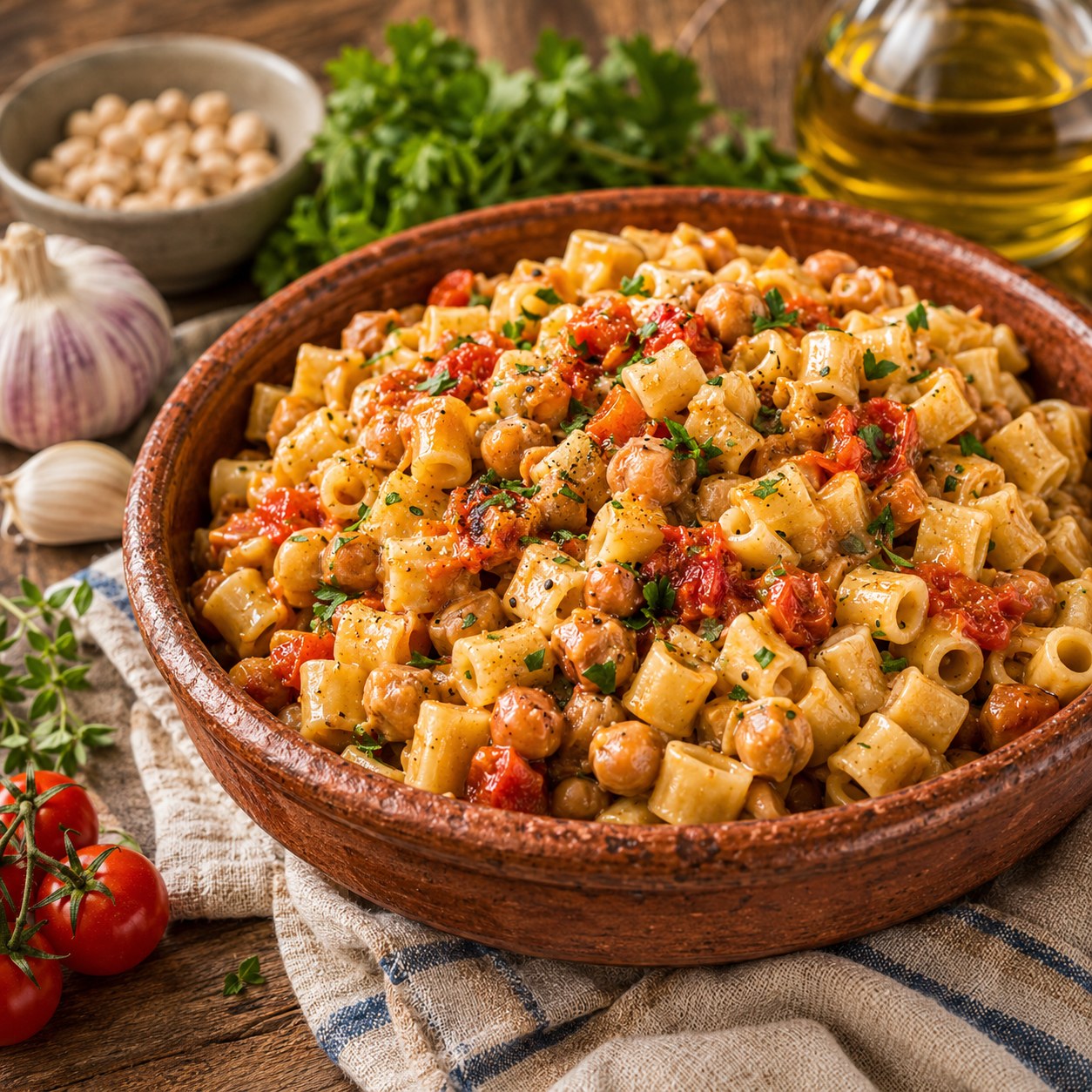
There is a legume older than the chickpea, older than the lentil in Italian peasant cooking, that most people outside of southern and central Italy have never encountered. The cicerchia — grass pea, chickling vetch, Lathyrus sativus — is a tooth-shaped, mottled pulse that has been cultivated in the Mediterranean since before recorded history. In the Apennine interior of Lazio, Puglia, Basilicata, and Molise, it was the legume that fed people through the hardest winters, the most desperate springs. It is earthier than a chickpea and richer than a fava, with a flavor that tastes specifically of the stony, mineral soil it prefers.
I should be honest about what this dish is: it belongs not to Naples specifically but to the broader cucina povera of central and southern Italy — the Apennine spine, the regions inland from the coasts. Campania has its own relationship with it, particularly in the provinces of Avellino and Benevento where the mountainous interior shares food traditions with neighboring Basilicata and Molise. The recipe below follows the method common to all these regions: the cicerchie soaked long, cooked in their own water until tender, then united with a soffritto, tomatoes, and short pasta cooked directly in the pot until the whole thing becomes a thick, inseparable stew.
The cicerchie is not simply a chickpea substitute. It has a quality of its own — a slight bitterness, a mineral depth, a texture that holds through cooking without becoming mealy — that makes the dish something specifically itself. If you find them (specialty Italian grocers, online, or in a good dry goods shop), they are worth the 24-hour soak and the long simmer. The result is one of the most honest and satisfying things the Italian peasant kitchen ever produced.
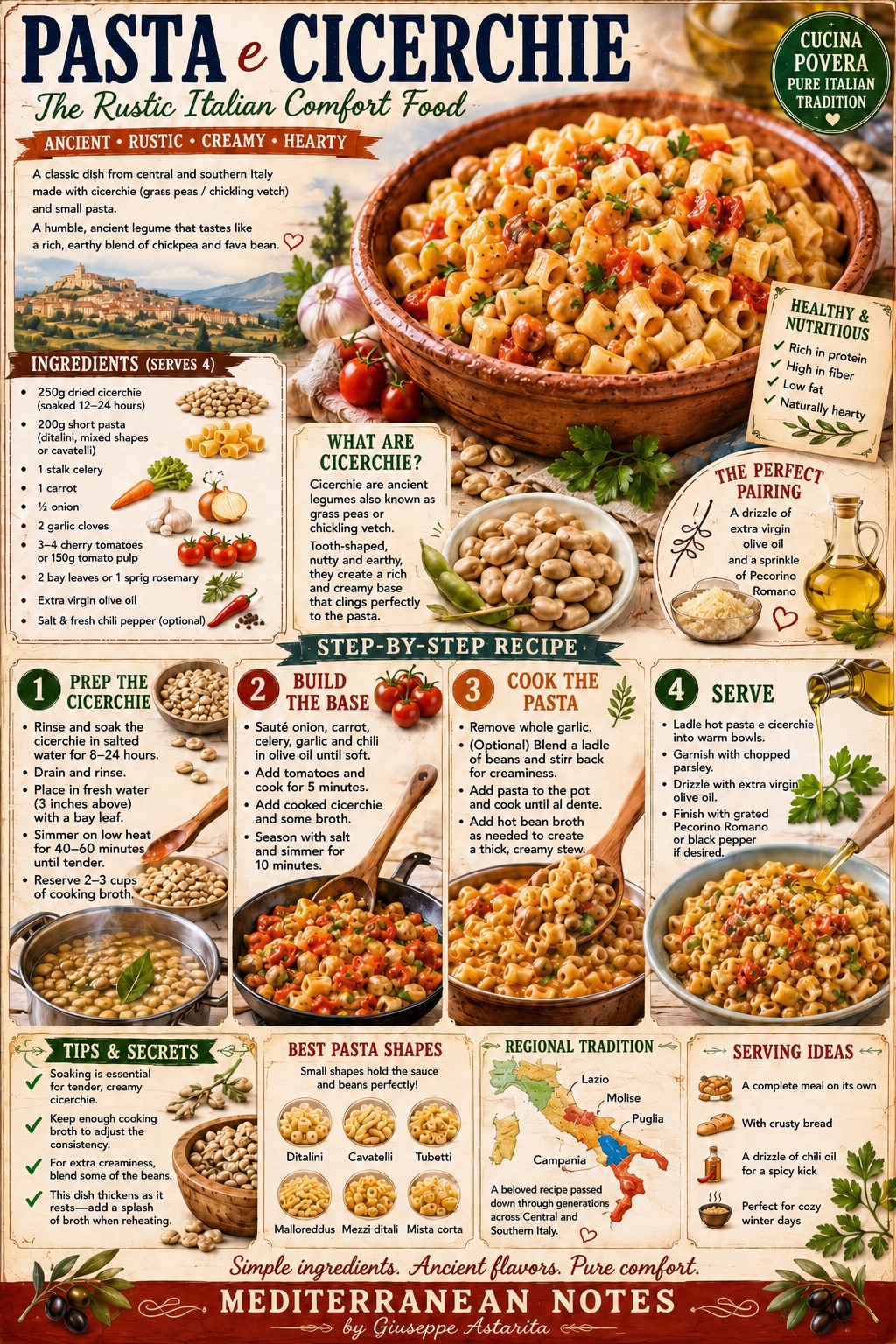
Tap to enlarge — La ricetta della pasta e cicerchie, passo dopo passo
Recipe — serves 4, 1h 20 min (+ soaking)
- 250 g dried cicerchie soaked 12–24 hours in salted water
- 200 g short pasta ditalini, mixed short shapes, or broken spaghetti
- 1 stalk celery · 1 carrot · half an onion finely minced
- 2 cloves garlic
- 150 g cherry tomatoes or tomato pulp
- 2 bay leaves or a sprig of fresh rosemary
- Fresh chili pepper to taste — optional
- Extra-virgin olive oil · salt
- Pecorino Romano or black pepper optional, to finish
- Fresh parsley chopped, to serve
This dish belongs to the tradition described in full on the cucina povera page — cooking that begins with constraints and ends with something better than its ingredients suggest. The cicerchie, like many prodotti tipici del Meridione, fell out of fashion in the postwar decades as cheap industrial food took its place. It is returning now, slowly, and the return is deserved. Nothing else tastes quite like it.