Panino Napoletano
'O pagnuttiello — the stuffed bakery roll of the rosticceria
Enriched dough packed with Salame Napoli, provolone piccante, prosciutto cotto, and hard-boiled egg — rolled and baked together until golden. Not a sandwich. A pastry. Available at every rosticceria in Campania.
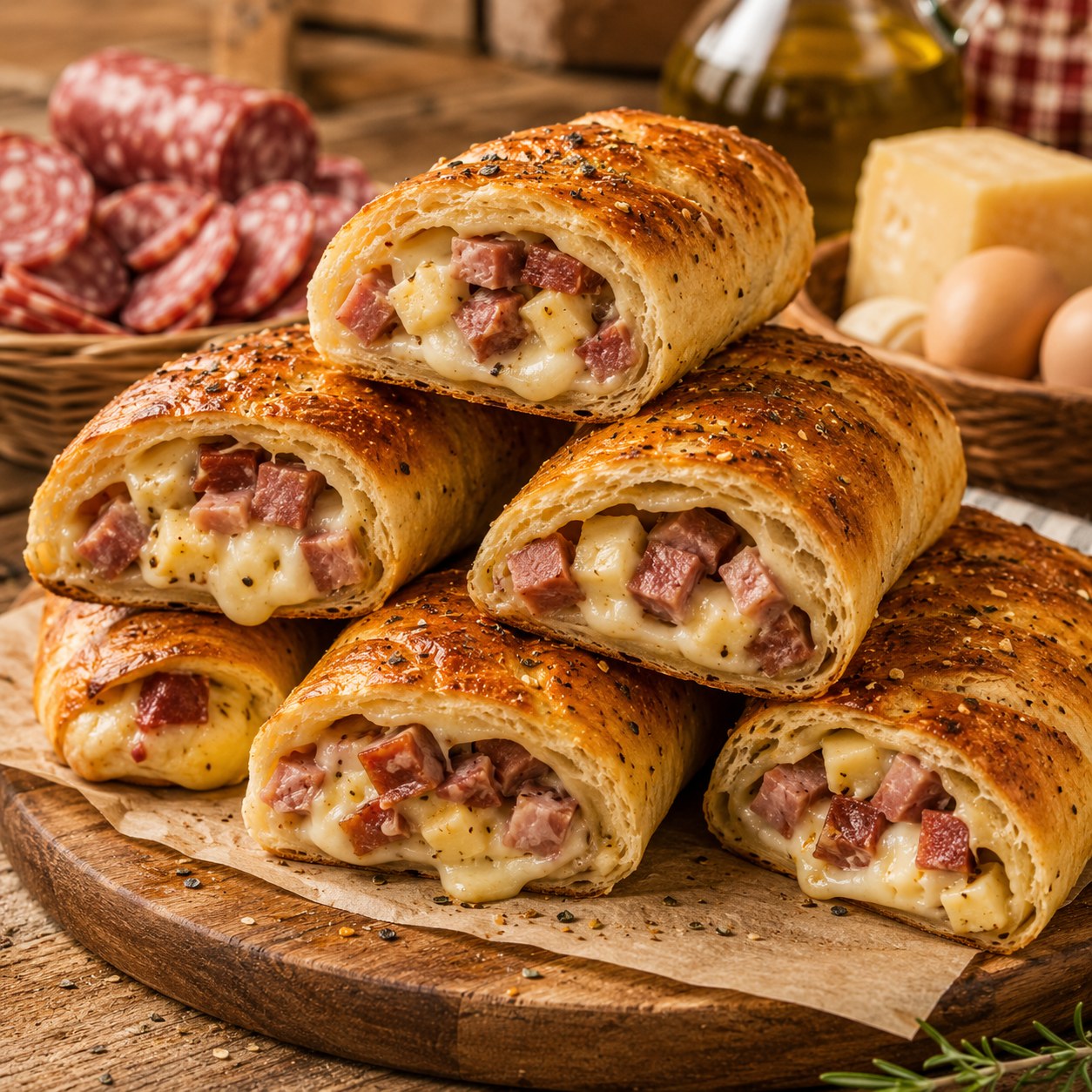
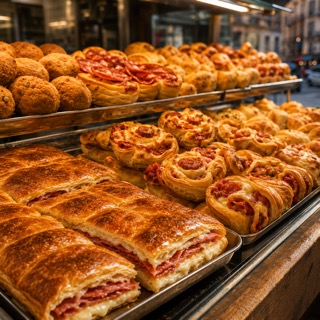
The panino napoletano — known locally as 'o pagnuttiello — is one of the things you found at the rosticceria, not at a sandwich shop. It is not a sandwich assembled after baking. It is a pastry: savory fillings rolled into enriched dough before anything goes in the oven, baked all at once until the outside is golden and the inside is a dense, fragrant mass of melted cheese and spiced cured meat. You pick it up and it is warm and slightly heavy and it smells of black pepper and lard. You eat it in a few bites, standing at the counter or walking, and that is the entire transaction.
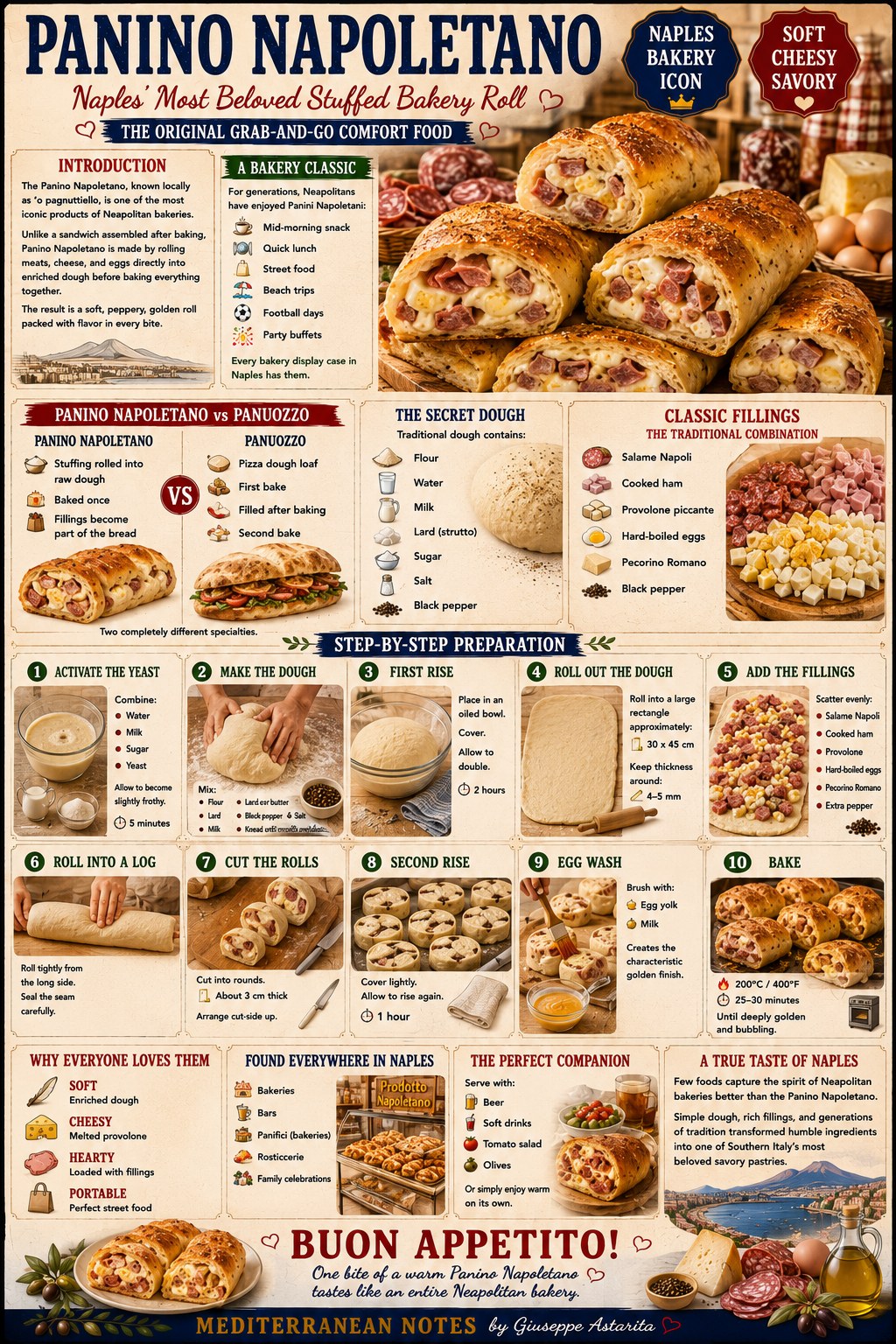
The dough is what separates it from every other stuffed bread. Not plain pizza dough — enriched dough, made with strutto (rendered lard) or butter, a little sugar, and a heavy hand with black pepper. The pepper is not optional. It runs through the whole thing and gives the dough its character — a slight warmth and spice that the fillings alone would not produce. The combination of sweet dough, salty salami, sharp provolone, and aromatic pepper is the thing that makes a panino napoletano taste like itself and nothing else.
The classic filling is Salame Napoli, prosciutto cotto, provolone piccante, Pecorino Romano, and hard-boiled eggs. The meats and cheeses are cut into small cubes, not slices. The dough is rolled into a rectangle, the filling is spread across it evenly, and the whole thing is rolled into a log and then cut into individual rounds before baking. The filling is sealed inside during the bake — it cannot be added afterward, cannot be varied once the dough goes in. What you see on the outside is a plain golden roll. What is inside is already fixed and already baked and already perfect.
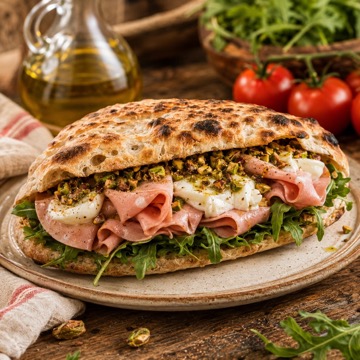
This is not the panuozzo, which is a completely different thing — a pizzeria item, made from high-hydration pizza dough, baked twice, sliced open and stuffed with fresh ingredients after the first bake. The panuozzo is long and charred and light inside. The panino napoletano is round and golden and dense. The name sounds similar; the food is not. In Campania this distinction matters, and in the specific geography of the Neapolitan street food landscape, each one belongs to a different shop: the panino to the rosticceria or the bakery, the panuozzo to the pizzeria.
The dough — il pagnuttiello
Classic filling
Method