Il Pan Carrè
The square sliced bread that coexisted peacefully with the best bread in the world
Campania has pane cafone, rosette, filoni, ciabatte baked fresh every morning at the corner shop. We still kept a bag of pan carrè in the kitchen. Each had its purpose and neither replaced the other.
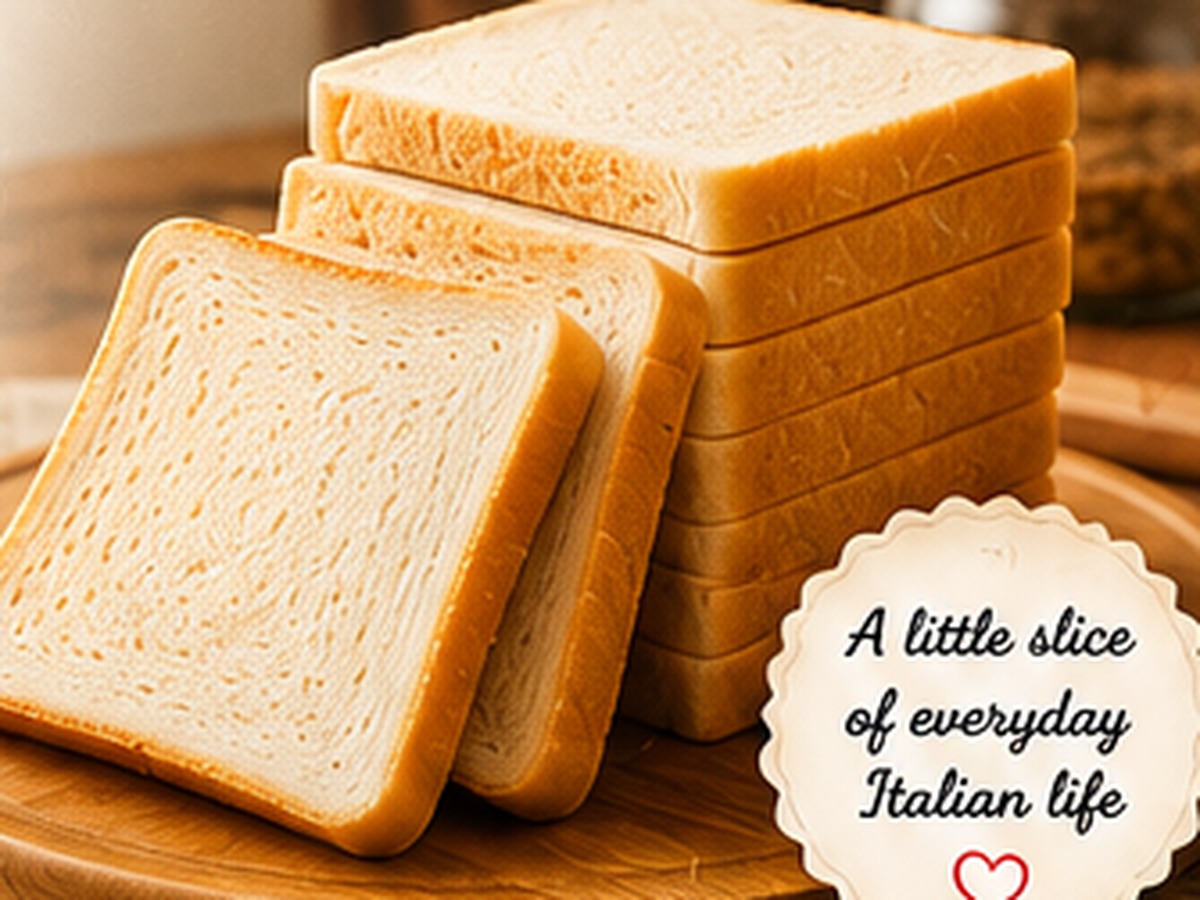
Bread in Campania was never made at home. That is one of the consistent facts of the region's domestic cooking: the bread came from the forno at the corner, bought fresh in the morning, and it was extraordinary. Pane cafone with its thick crust and open, slightly chewy crumb. The rosetta, impossible to replicate outside the region. The filone for everyday use. We grew up with this bread available at essentially any hour within a short walk, and it was very good. And yet there was also, always, a bag of pan carrè in the kitchen drawer or on the counter, the plastic bag with the red and yellow logo, slightly soft, crustless on the sides, uniform in its geometry. Both were correct. Neither contradicted the other.
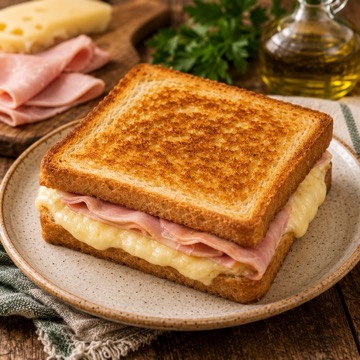
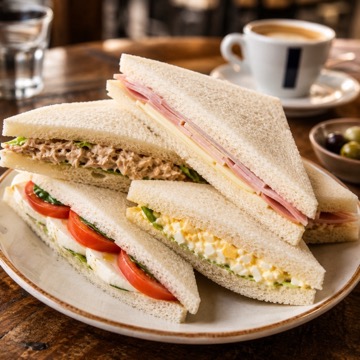
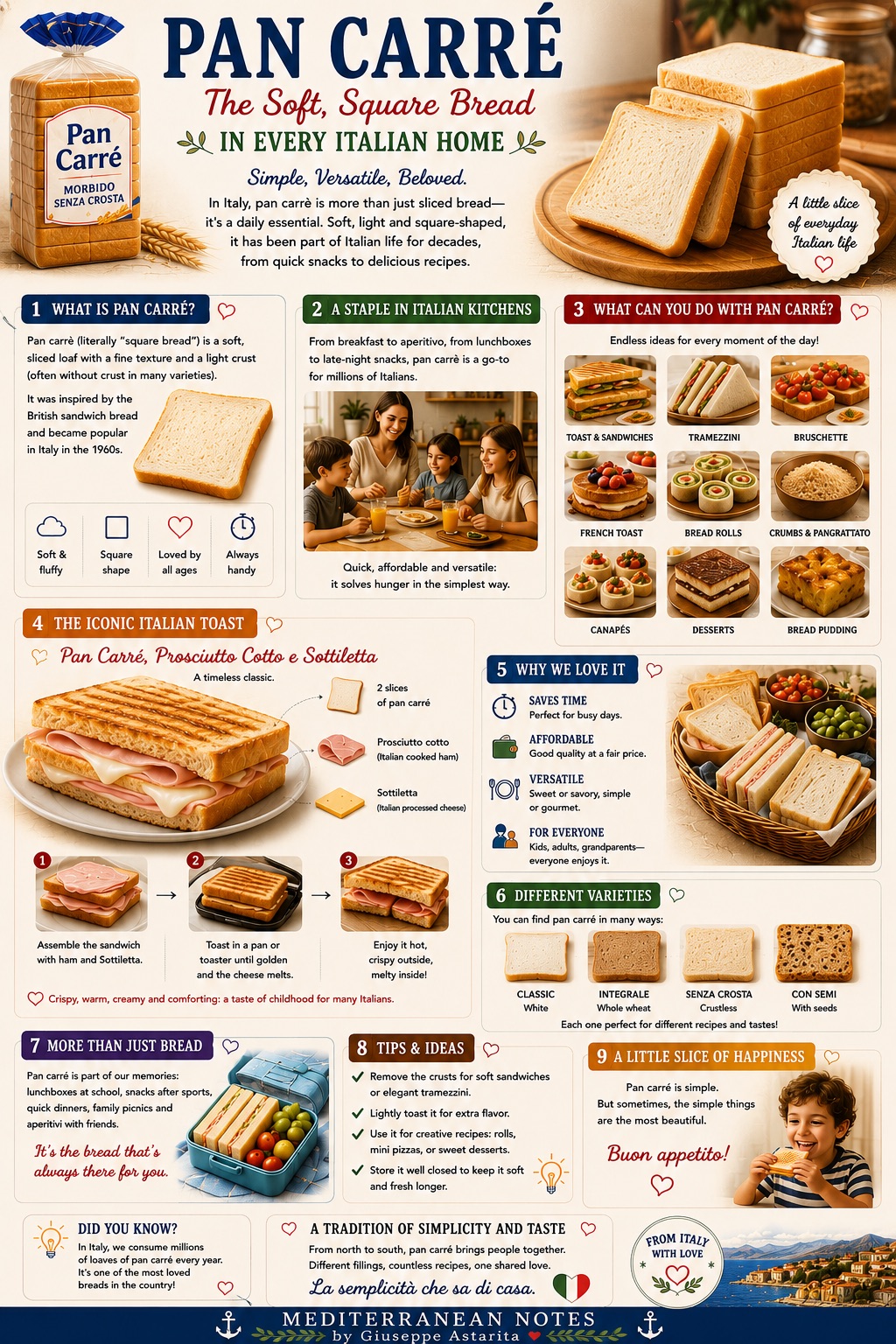
The pan carrè had a specific job. You used it for toast — what we called a toast, meaning the pressed and grilled sandwich with prosciutto cotto and Sottiletta that was a staple of quick lunches and late-night kitchens. You used it for tramezzini, cut diagonally, crustless, with tuna and mayo or prosciutto and butter or egg salad for parties. You spread Nutella on it for breakfast or merenda, because the softness and the mild sweetness of the bread suited the hazelnut chocolate in a way that the stronger flavor of pane cafone did not. You used it when the real bread had run out, or when you needed something that would not overpower what was inside it.
I have been looking for a true equivalent since I moved to the United States in 2004 and I have not found one. American sandwich bread is softer, sweeter, and structurally different — it compresses differently in a toaster and does not hold together the same way under the pressure of a panino maker. The product sold in Italian shops here as pan carrè is often a reasonable approximation, but the original — the Mulino Bianco version, the Harry's, the toast bread from the supermarket in Caserta — has a specific texture that is difficult to describe and immediately recognizable when you encounter it. It is not just bread. It is pan carrè, which is a different category.
The tramezzino deserves its own post, and I will write it. But pan carrè is the foundation of that tradition, which is why it appears here first. Without the uniform, crustless softness of pan carrè, the tramezzino does not work the same way. The filling is the thing; the bread is the container, and a container should not assert itself. This is the structural argument for pan carrè in a region that had excellent rustic bread available at all times: the two products solve different problems. The rosetta is for eating with prosciutto or mozzarella or splitting open to make a proper panino. Pan carrè is for pressing, layering, trimming, toasting under weight. They are not interchangeable and the kitchen was correct to have both.
Pan carrè contains more sugar and fat than typical rustic bread, and these two additions change how it behaves under heat. The sugars (often a combination of sucrose and residual glucose from fermentation, sometimes with added dextrose) accelerate the Maillard reaction — the browning reaction between amino acids and reducing sugars that produces the characteristic golden color and toasted flavor. This means pan carrè reaches golden-brown color faster than a lean artisan bread at the same temperature. The higher fat content (from added butter or vegetable oil) lubricates the gluten structure and produces a softer crumb that compresses cleanly under pressure without crumbling, which is why it is the correct bread for a pressed sandwich maker. Artisan bread, with its open crumb and crust structure, resists compression and loses its architecture when pressed; the filling may spill out the sides. The uniform closed crumb of pan carrè holds the compression and produces the sealed edge that makes a proper Italian toast. The absence of crust on the sides (in the crustless varieties) is not a concession to softness but a deliberate product choice that makes the bread slice and trim cleanly — essential for tramezzini, where the diagonal cut and crustless edge are part of the presentation.
What pan carrè was for
I bring pan carrè back from Italy when I visit, which sounds excessive but is not. I pack a bag in the checked luggage alongside the pasta and the preserved tomatoes. It keeps for the flight and a few days after, and those are the days I make toast or tramezzini the way I remember them. The American bread is adequate for many things. For this specific thing, it is not quite the same.
Buon appetito — e fatti un toast stasera.