Insalate Napoletane
Simple Ingredients. Bold Flavors. True Naples.
In Naples, salads are not a starter. They are part of the daily meal — served as a side dish alongside the secondo, or at the very end to clean the palate before fruit. Simple, seasonal, dressed with olive oil and lemon or a little vinegar. The ingredients speak for themselves. The dressing does not compete with them.
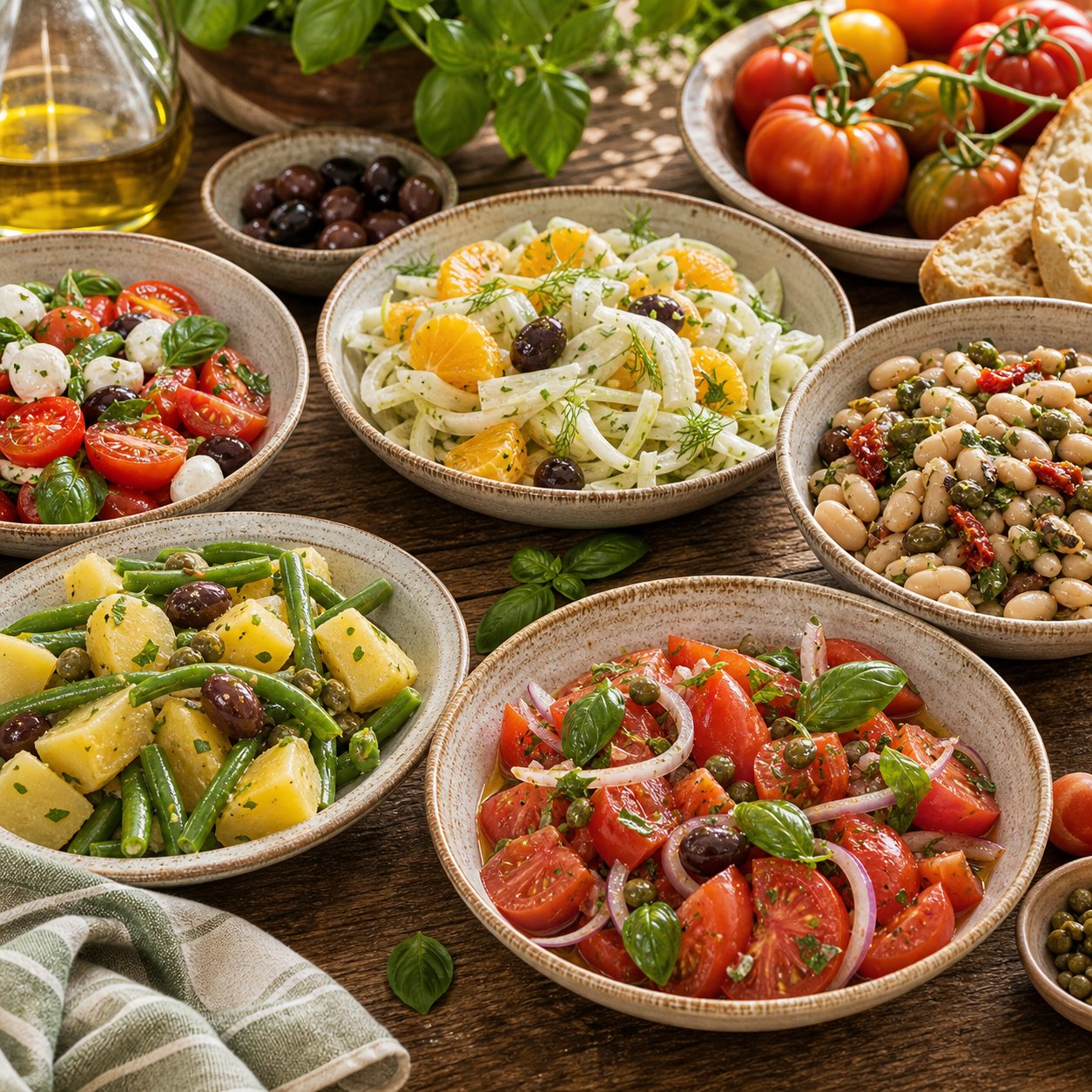
The place of the salad in the Neapolitan meal structure is specific and it has been described already in this collection in the daily rhythm post: it comes after the secondo, not before the pasta, and its purpose is partly digestive and partly palate-cleansing — per pulirsi i denti ed aiutare a digerire, as my mother put it. This positioning is not a quirk. It reflects a meal logic in which the progression of flavors is managed: the richest and most complex course (the secondo) precedes the simplest (the salad), and the fresh acid of lemon or vinegar and the slight bitterness of the greens close the savory part of the meal before the fruit arrives.
Neapolitan salads follow a few consistent principles regardless of which ingredients they use. Best quality raw materials — a ripe tomato in season, fresh fennel, properly cured olives, real buffalo mozzarella for the caprese. A restrained dressing: good olive oil, salt, lemon juice or a little vinegar. Nothing that overwhelms the ingredient. No complicated emulsifications, no added sweeteners, no dressings with ten components. The Neapolitan touch is simply quality ingredients dressed with honesty. As the infographic puts it: few ingredients, maximum flavor.
In Naples, even a simple salad has a story to tell. The tomatoes are local, the oil is from the hills, the lemon is from the Amalfi coast. Good food is not complicated. It is honest, generous, and made with love. That is the Neapolitan way.
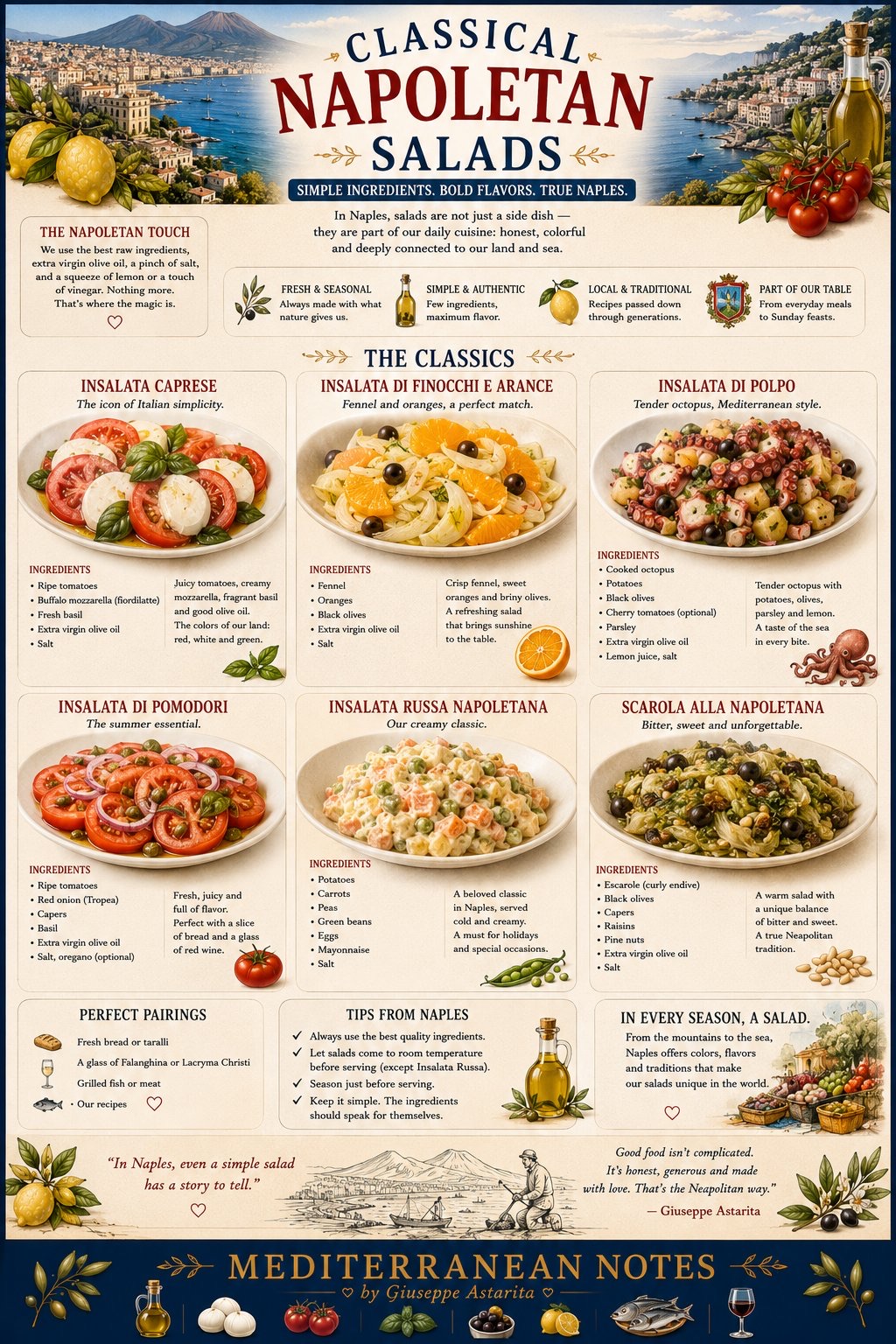
Insalate napoletane — i classici. Click to enlarge.
The five classics
The icon of Italian simplicity. The colors of the flag: red, white, green.
Ripe tomatoes (sliced) · Mozzarella di bufala (fior di latte) · Fresh basil · Extra-virgin olive oil · Salt
The caprese is only as good as its weakest ingredient. A mediocre tomato or a cold, rubbery mozzarella produces a mediocre caprese. A ripe August tomato and a buffalo mozzarella eaten at room temperature on the day it was made produces something remarkable from three ingredients. No vinegar, no balsamic, no black pepper — these are additions that belong to other preparations. Here the tomato and the mozzarella are the point and everything else steps aside. See the
mozzarella di bufala post for the full argument about why room temperature matters.
Season: summer only — when tomatoes are ripe. Never in winter.
The summer essential. Fresh, juicy, and full of flavor. Perfect with bread and wine.
Ripe tomatoes (sliced) · Red onion (Tropea) (thinly sliced) · Fresh basil · Capers (optional) · Extra-virgin olive oil · Salt · Oregano (optional)
The tomato salad is the simplest salad in the Neapolitan kitchen and the one most dependent on ingredient quality. Tropea onion — the sweet, almost violet-red onion from Calabria — is mild enough to eat raw alongside tomatoes without dominating them. Slice it very thin and if it is sharp, soak briefly in cold water. The capers and oregano are optional additions that push the salad toward a more southern character. The oil is non-negotiable: best quality, generous. Let the salad rest for 10 minutes before serving so the tomatoes release some juice into the oil. That liquid — the combination of tomato juice and olive oil at the bottom of the bowl — is what bread is for.
Season: summer. At other times of year the tomatoes are not good enough.
Fennel and orange — crisp, sweet, and briny. A winter salad that brings sunshine to the table.
Fennel (thinly sliced) · Oranges (peeled, segmented or sliced) · Gaeta black olives · Extra-virgin olive oil · Salt
This is the Campanian winter salad — the one that appears when the summer tomatoes are gone and the market fills instead with fennel bulbs and blood oranges. The combination of crisp, anise-flavored fennel with sweet orange and briny olives is characteristic of southern Italian cuisine and has Arab influence in the sweet-bitter-salty combination. Slice the fennel very thin using a mandoline if possible. Use blood oranges in January and February when they are at their best. The bitterness of the pith around the orange segments should be avoided — segment carefully. No vinegar, no lemon; the orange provides all the acid the salad needs.
Season: winter, when both fennel and oranges are at their peak.
A beloved classic in Naples. Served cold and creamy. A must for holidays and special occasions.
Potatoes (diced, boiled) · Carrots (diced, boiled) · Peas (boiled) · Green beans (boiled, chopped) · Eggs (hard-boiled, diced) · Mayonnaise · Salt
The insalata russa is one of the few salads in the Neapolitan repertoire that is not dressed with olive oil — it is dressed with mayonnaise and served cold, which places it in a different category from the others here. It is a festive preparation: made ahead, refrigerated, and brought out for holiday meals and family celebrations where the table holds many things simultaneously. The Neapolitan version uses boiled vegetables diced small and uniformly — the precision of the dice matters more than it might seem, as the evenness of texture is part of the character of the dish. Always better the day after it is made, when the vegetables have absorbed the mayonnaise. Served cold, not at room temperature.
Season: year-round, but primarily for holidays and celebrations.
A warm salad with a unique balance of bitter and sweet. A true Neapolitan tradition.
Escarole (curly endive) · Gaeta black olives · Capers · Raisins · Pine nuts · Extra-virgin olive oil · Salt
The scarola alla napoletana as a warm salad — distinct from the
pizza di scarola which uses the same ingredients as a pie filling — is a winter side dish with the same flavor logic: the bitterness of the escarole against the sweetness of the raisins, the brininess of the olives and capers, the richness of the pine nuts. Served warm, slightly wilted, dressed generously with olive oil. The agrodolce combination is distinctly Arab-influenced in origin and has been part of Neapolitan cooking for centuries. Season with salt only — no vinegar or lemon, which would compete with the natural complexity of the dressing.
Season: autumn and winter, when escarole is in season.
Why salad after the meal — the digestive logic confirmed
My mother's explanation for serving salad at the end of the meal — per pulirsi i denti ed aiutare a digerire — is empirically correct, though the mechanisms are more specific than the folk description suggests. Raw vegetables served after a substantial meal provide insoluble fiber, which accelerates gastric motility and helps move the food already in the stomach through the digestive tract. The bitter compounds in salad greens — particularly in escarole, radicchio, and wild greens — stimulate bile secretion from the gallbladder, which improves fat emulsification and absorption from the preceding meal's fats. Lemon juice and vinegar, used in the dressing, provide organic acids that support the acidic environment of the stomach and may assist protein digestion.
The Mediterranean dietary pattern consistently positions raw vegetables and legumes as regular components of the meal — not as occasional additions but as structural elements. The insalata at the end of the Neapolitan lunch is part of this structure: it closes the savory course, prepares the palate and the digestive system for the fruit that follows, and ensures that every meal contains a component of raw, minimally processed plant material. The tradition encoded this correctly long before the fiber research existed to explain why.
The Neapolitan rules for dressing a salad
Three rules that apply to every salad in this collection except the insalata russa:
1. Best olive oil, generously. The dressing is not incidental — it carries the flavors together. A poor olive oil produces a poor salad regardless of the quality of the vegetables.
2. Salt just before serving, not in advance. Salt draws moisture from the vegetables and they become soggy if left dressed too long. The exception is the tomato salad, where a 10-minute rest is beneficial because the released juice becomes part of the dressing.
3. Dress simply. Lemon or a little vinegar, salt, oil. Nothing that competes with the ingredient. The Neapolitan salad does not need complexity in the dressing because the complexity is in the ingredient itself — the ripe tomato, the fresh fennel, the properly ripened olive. Let them speak.
These are not elaborate preparations and they do not need to be. The Neapolitan approach to salad is the same as the Neapolitan approach to most things: use the best ingredients available in their proper season, dress them honestly, and serve them at the right point in the meal. The salad earns its place at the table not as a decoration or a concession to health but as a functional course with a specific role — after the secondo, before the fruit, doing its digestive work while also tasting of whatever the season has to offer.
Buon appetito — e sempre l'insalata alla fine.