Frittatina di Pasta
The queen of the Neapolitan rosticceria window
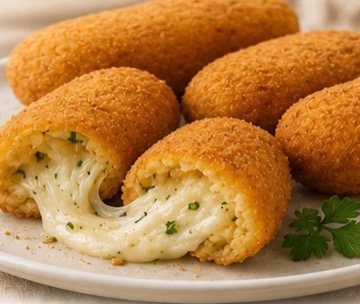
Bucatini bound with béchamel, ground meat, peas, and provola — shaped into discs, battered, and fried. Dense, golden, creamy inside. The one item on the pizzeria antipasto plate that nobody ever leaves behind.
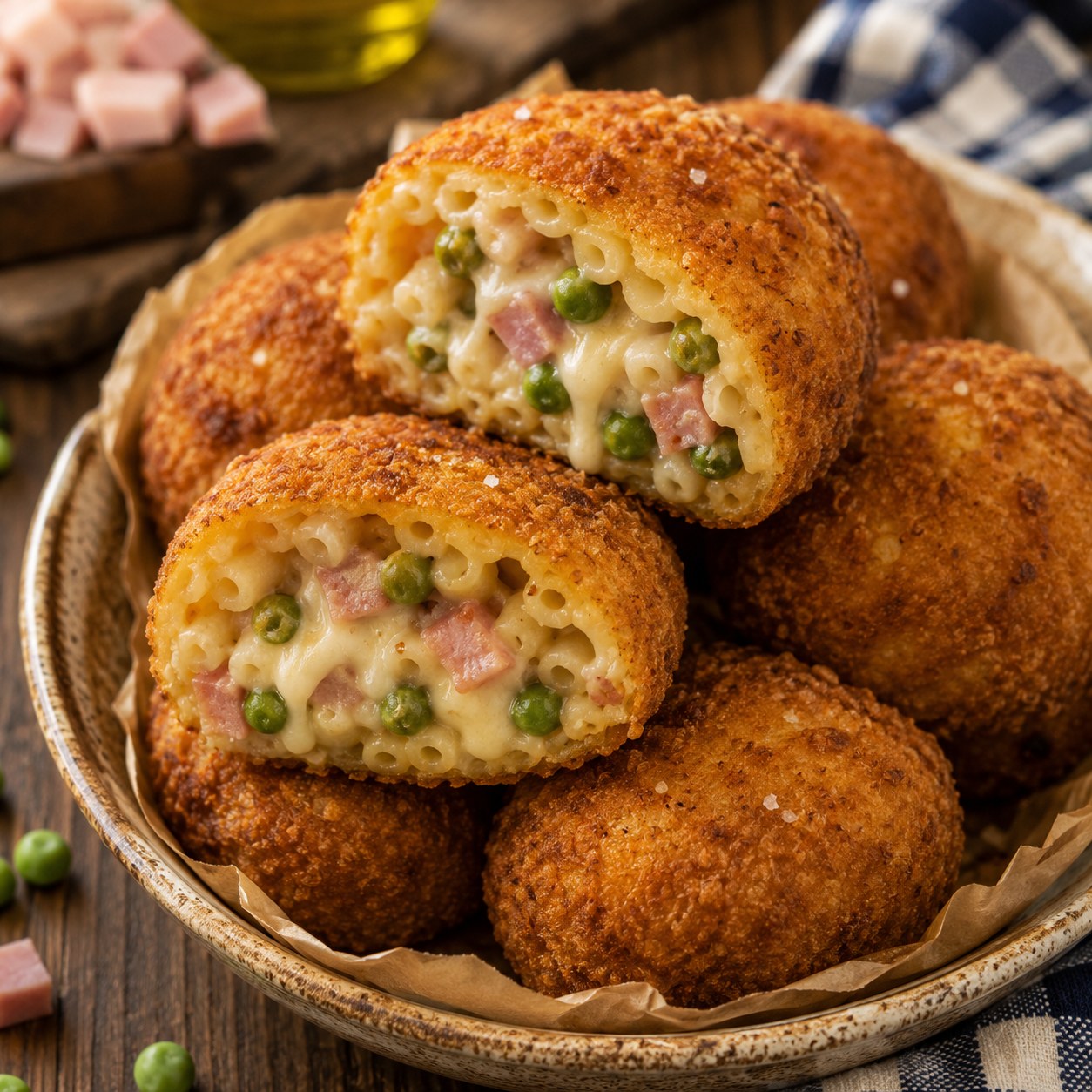
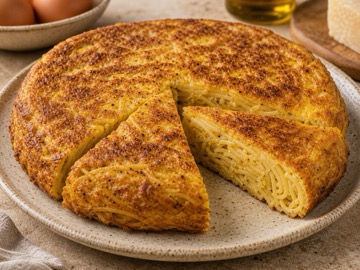
In Naples, the frittatina di pasta is not a frittata. The name is misleading — there is no egg holding it together the way an omelette is held together, no pan-cooking of the kind that produces a flat round of set egg. The frittatina is a croquette: cooked bucatini or rigatoni cut short, bound with a thick béchamel, mixed with ground meat, peas, and provola, formed into a dense disc, dipped in batter, and fried in deep oil until the outside is golden and the inside is creamy and inseparable. It has the shape of a small hockey puck and the weight of something considerably more serious than a snack.
The name comes from the flat disc shape, which vaguely echoes a frittata, and from the fact that it was once made in the home with leftover pasta cooked down into something compact enough to be fried. The street version — the version you find behind the glass at the rosticceria — is more elaborate and more standardized: béchamel as the binder (not egg), a thick coating batter (not breadcrumbs), specific fillings that have become canonical. The home version and the shop version are recognizably the same dish but they are not exactly the same preparation.
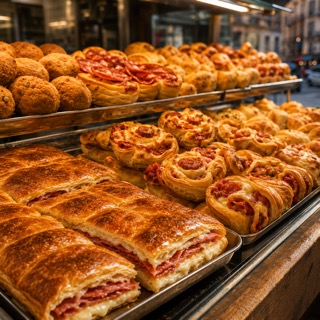
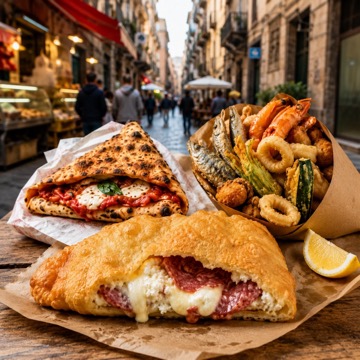
In Naples, the frittatina di pasta is an essential street food religion. While typically served as a standard appetizer in pizzerias while you wait for your main pie, it is also sold directly out of street-facing display windows in traditional friggitorie — fry shops — across the city. You point at the one you want through the glass. It comes out in a paper napkin, still hot. You eat it standing up or walking, the batter crackling when you bite through, the interior spilling a little at the edges. This is the correct way to eat it.
The filling is the part that varies the most between shops. The classic is ground beef or mixed meat, peas, and provola or fior di latte — the canonical combination that has been in the rosticcerie of Naples for generations. Variations exist: sausage and friarielli (winter), vegetarian versions with ricotta and spinach, versions made heavier with added hard-boiled egg. The béchamel is non-negotiable. Without it the filling does not bind, the disc does not hold shape, and the frittatina collapses under its own weight when you bite into it. Béchamel here is not a sauce — it is a structural element.
Most fried items are coated in breadcrumbs, which create a dry, relatively thin crust that transmits heat efficiently. The frittatina uses a flour-and-water batter instead. The batter forms a thicker, more insulating shell around the filling — trapping steam inside the disc and creating a soft layer between the crust and the interior. The result is a crust that shatters on the outside while the interior heats through more slowly, staying creamy rather than drying out. Breadcrumbs would produce a harder, drier interior on a disc this thick.
Béchamel works as a binder because its roux — cooked flour and butter — gelatinizes the starch granules on heating and then sets on cooling. When the filling cools after preparation, the gelatinized starch creates a semi-solid matrix that holds the pasta, meat, peas, and cheese together. Under frying temperatures, this matrix liquefies slightly, producing the characteristic creamy interior. The same property that makes béchamel a sauce also makes it the right binder for a fried croquette: it is fluid when hot, firm when cold, and never rubbery.
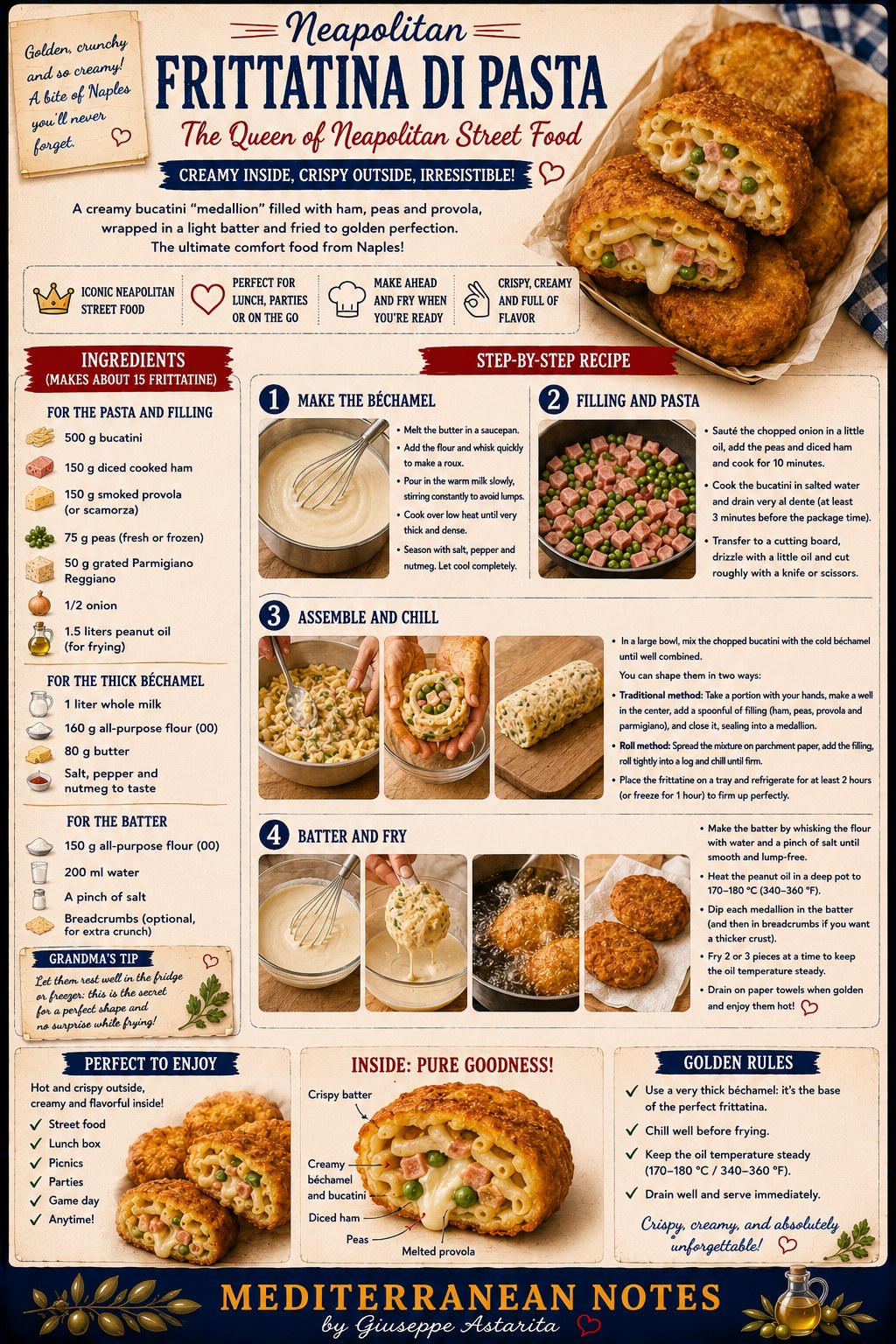
The recipe — Frittatine di Pasta
Makes about 10–12 frittatine
For the pasta and filling
For the thick béchamel (about 600 ml)
For the batter and frying
Method
Serve hot. Eat immediately — the batter softens as it cools and the interior needs to be creamy, not cold.