Finocchi Arraganati
Baked fennel with breadcrumbs and cheese
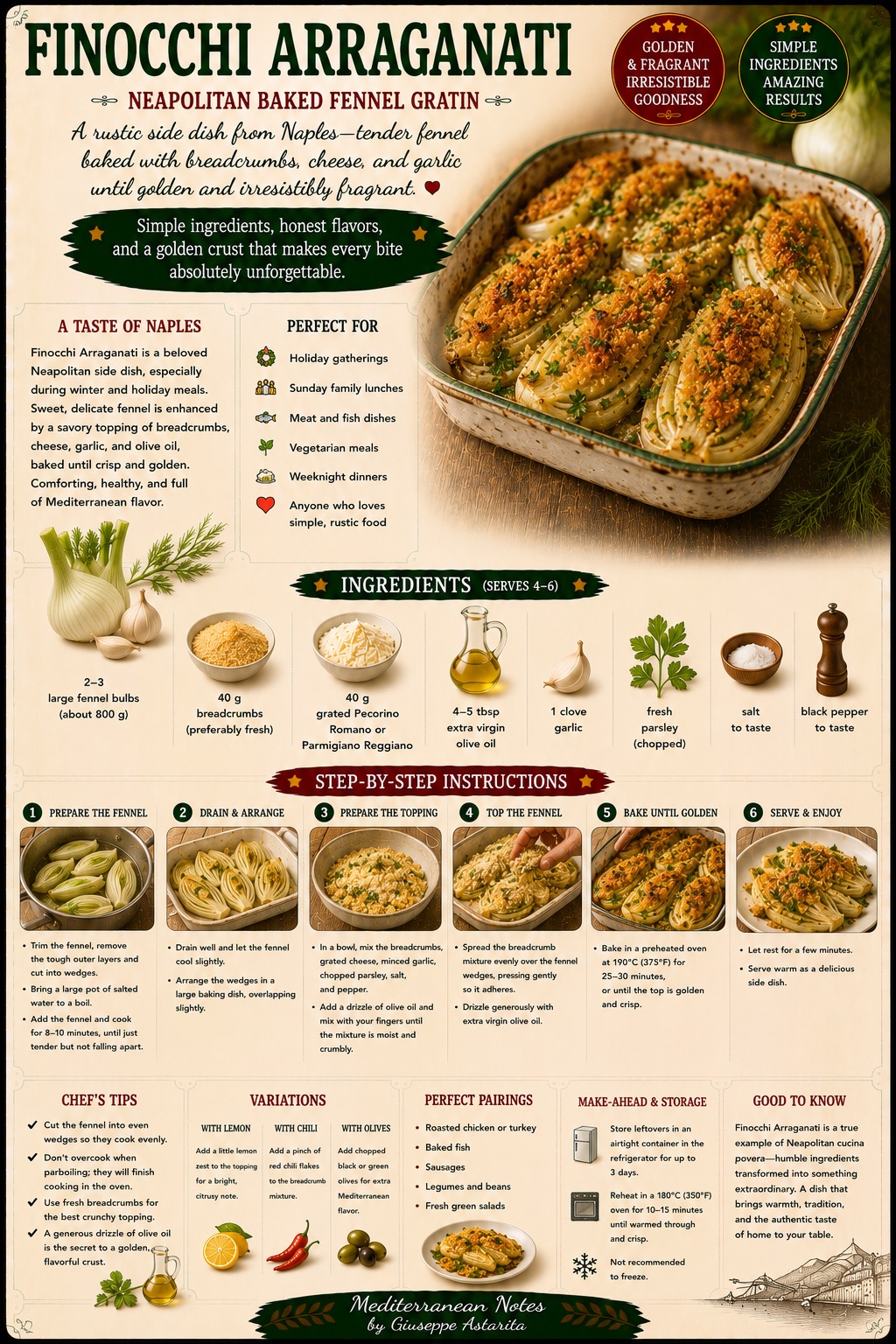
Fennel, briefly boiled, then baked under a thick layer of breadcrumbs, garlic, parsley, and grated cheese until the top turns golden and crisp. This was my mother and father's favorite way to eat fennel — more than raw, more than in a salad, this is the version that got requested.
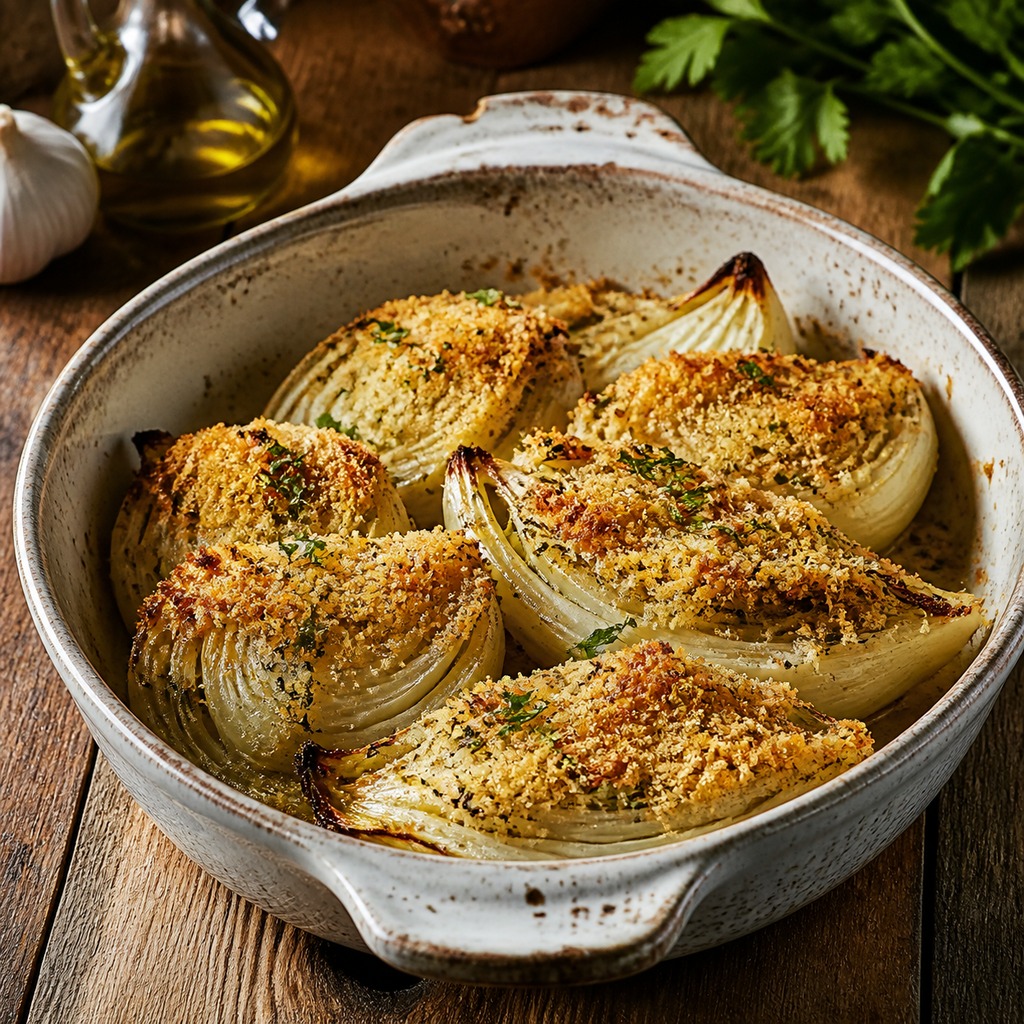
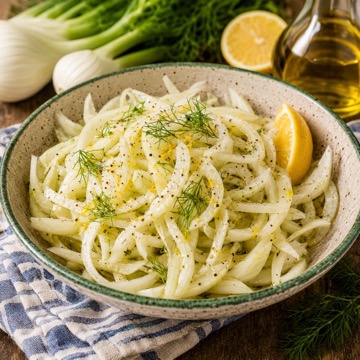
Fennel raw, thinly sliced with a squeeze of lemon, is one thing — crisp, faintly sweet, a good pinzimonio vegetable or a base for a winter salad. Fennel arraganato is a completely different experience, and it was the version both my parents preferred. Boiled briefly to soften it, then baked under a mixture of breadcrumbs, garlic, parsley, and grated cheese until a crust forms on top, it turns into something closer to a gratin — the anise sharpness of raw fennel rounds out into something sweeter and more savory, and the crumb topping does the rest of the work.
The name arraganato — from origano, oregano — describes a whole family of Southern Italian dishes finished the same way: a coating of breadcrumbs, garlic, and herbs, baked or gratinéed until crisp. Mussels, clams, and swordfish get the same treatment. Fennel arraganato applies the same logic to a vegetable, and it works because fennel, unlike some vegetables, holds its shape well after boiling and gives the topping something firm to sit on rather than turning to mush underneath it.
It is a simple dish, closer to an assembly than a real cooking project, and that simplicity is part of the appeal. A short blanch, a scattering of the same pantry ingredients you would use on almost anything else arraganato, twenty minutes in the oven. What comes out is a contorno that can sit next to a simple secondo — a piece of grilled meat or fish — without competing with it, and that disappears from the table quickly.
Raw fennel is dense and fibrous — its structure relies on cellulose and pectin in the cell walls, which need sustained heat and moisture to soften. Baking it directly from raw, especially under a dry breadcrumb topping, would leave the fennel undercooked in the center by the time the crumb topping is done browning, since the oven's dry heat penetrates a dense vegetable slowly. A brief blanch in boiling water gets a head start on softening the fennel's structure through moist heat, which is far faster and more even than dry oven heat alone. The subsequent bake then only has to finish the fennel and brown the topping, rather than cook both from scratch, which is why the timing works out to a relatively short 20–30 minutes.
The breadcrumb topping itself relies on the Maillard reaction — the browning that occurs when proteins and sugars in the breadcrumbs and cheese are exposed to high, dry heat. A drizzle of olive oil over the top before baking is not optional if you want real crispness: the oil conducts heat efficiently into the crumb layer and helps it dehydrate and brown rather than simply steam under the moisture released by the fennel beneath it.
The recipe
For four, as a contorno. Choose fennel bulbs that are firm, tightly closed, and heavy for their size.
Variations
Serve warm, alongside a simple grilled or roasted secondo. It holds up well at room temperature too, which makes it a forgiving dish for a table that is not all sitting down to eat at the same moment.
Buon appetito.