Castagne al Forno
Roasted chestnuts -- the caldarroste on the street and the oven version at home
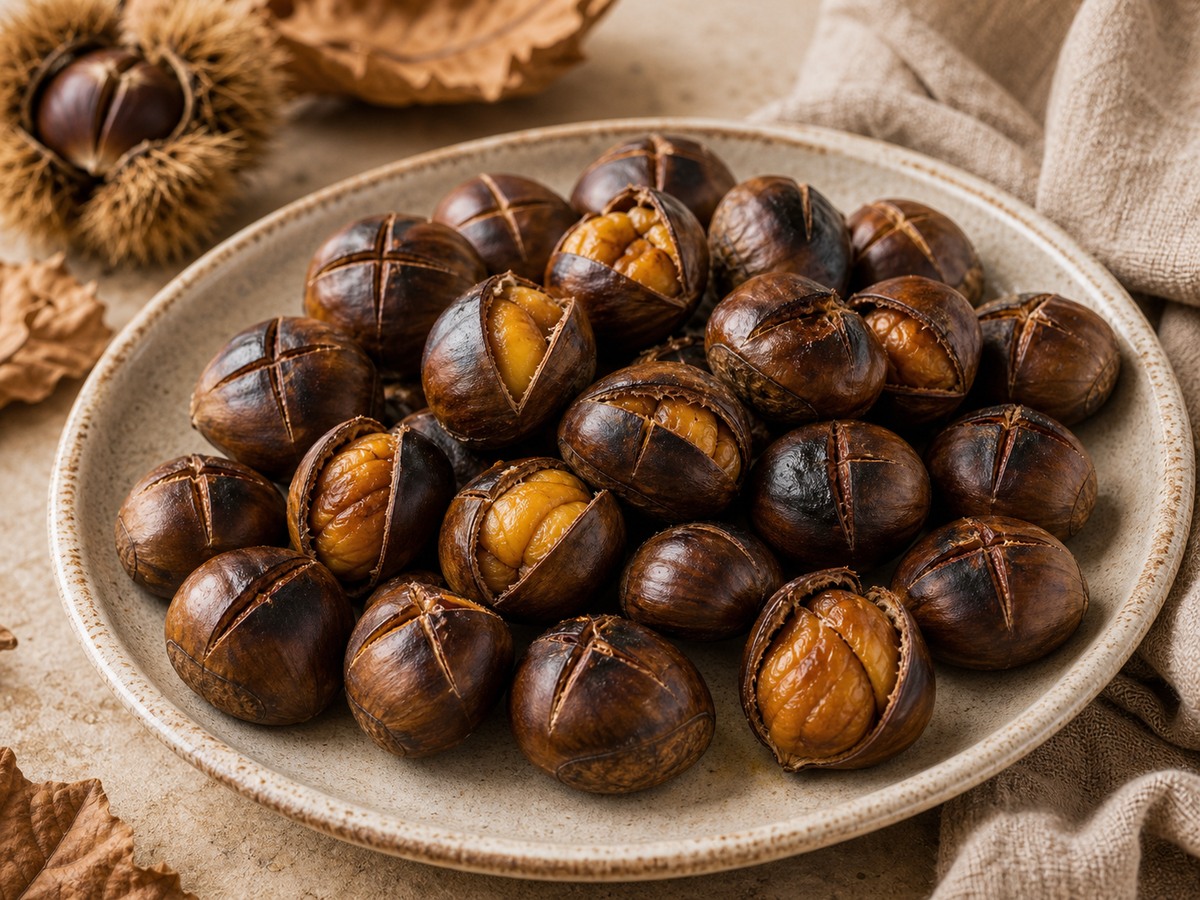
When the air turns cold in Campania -- October into November, the hills of the interior already touched by autumn while the coast is still mild -- the caldarroste appear on the streets. The vendors set up their stands in the piazzas and along the pedestrian streets, a wide iron pan over an open flame, fresh chestnuts scored with a cross on the flat side and roasting in the heat until the shells split open and the flesh inside turns from cream to gold. The smell fills the whole piazza before you can see where it is coming from. You buy them in a paper cone, still hot from the pan, and the tradition says you should put them in your pockets to warm your hands as you walk. The heat from the chestnuts spreads through your coat. This is one of the specific pleasures of the Campanian winter that is simple and inexpensive and available on the street and requires nothing more than a cold evening and a coin for the vendor.
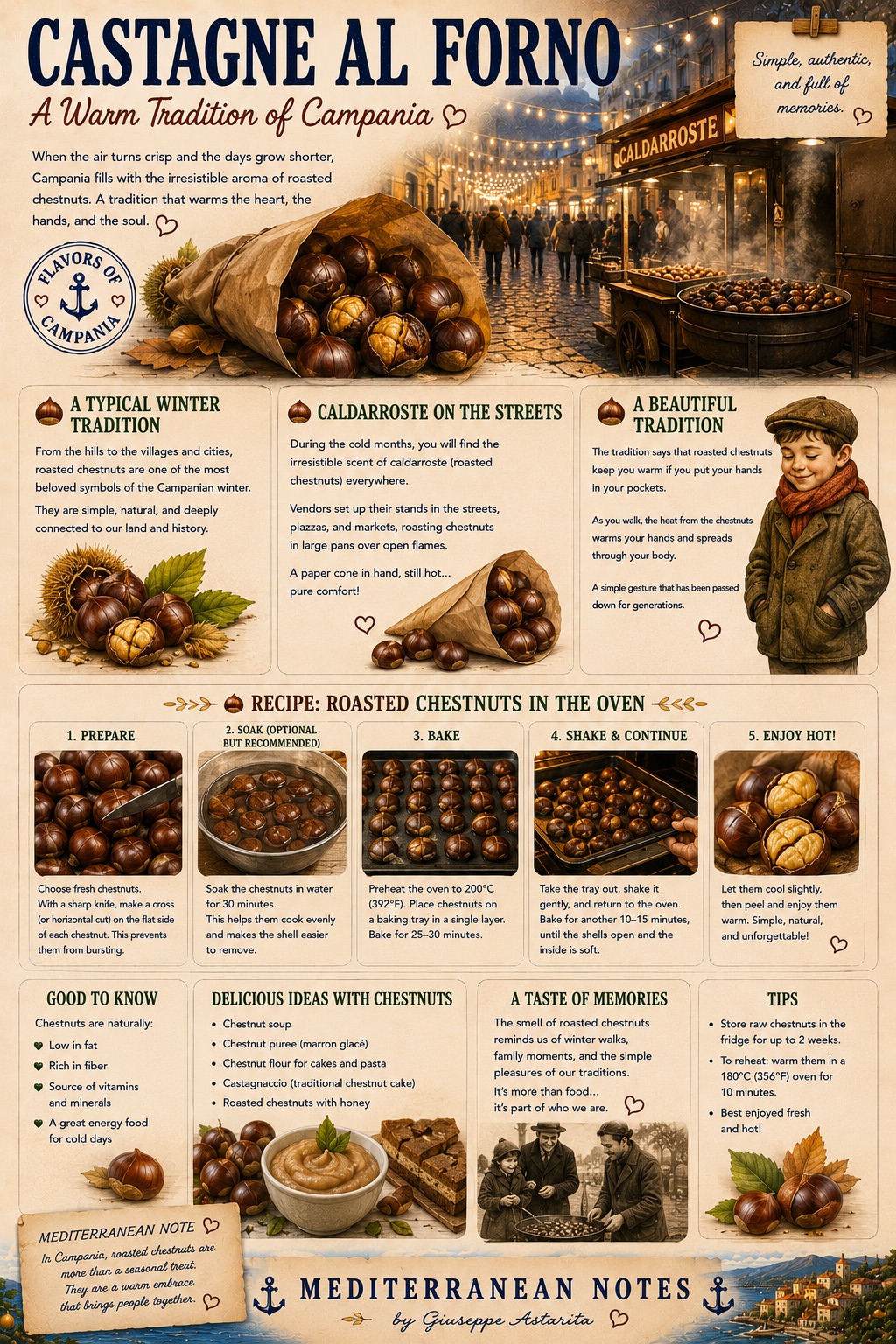
The caldarroste are the street version. At home, the castagne al forno -- chestnuts roasted in the oven -- are the domestic equivalent, made in the kitchen on autumn and winter evenings, eaten at the table or in front of the television, the shells peeled back to reveal the steaming, slightly sweet, starchy flesh inside. The oven method requires only a sharp knife to score the cross, an optional soak in cold water for thirty minutes to help the shell separate, and a hot oven at 200 degrees for thirty-five to forty minutes until the shells have opened and the flesh is cooked through and tender. The cross in the shell is not decoration -- without it the trapped steam builds pressure inside the chestnut and the shell can burst explosively in the oven, which is dramatic and messy and not what you want.
Chestnuts contain approximately 45-50% water by weight -- significantly more than most other nuts. When exposed to high oven temperatures, this water converts to steam rapidly, generating internal pressure inside the sealed shell. The shell of a chestnut is structurally strong enough to contain this pressure up to a certain point, after which it ruptures explosively -- the chestnut "bursts." The cross scored on the flat side provides a controlled release point for the steam: as the chestnut heats, the steam escapes through the scored opening before pressure builds to the bursting threshold, and the shell splits neatly along the score line. The optional water soak serves two additional purposes: it adds surface moisture that slows the drying of the outer shell during roasting, allowing more time for the interior starch to cook through before the shell browns excessively; and it makes the inner skin (the pellicle) slightly easier to remove after roasting.
The recipe
Simple and completely reliable. The only equipment needed is a sharp knife, a baking sheet, and a hot oven.
Eat with a glass of new wine if you have it -- the classic autumn combination. Or simply as they are, warm, around a table with family. The chestnuts and good company are the point.
Buon appetito —
e tienile in tasca per scaldarti le mani.