Bucatini con pecorino, pomodoro e basilico
Bucatini is hard to find and worth seeking. It has a hole through the center, and when you eat it, it whistles. The protagonista is not the spice — it is the pecorino and the way it dissolves into the sauce.
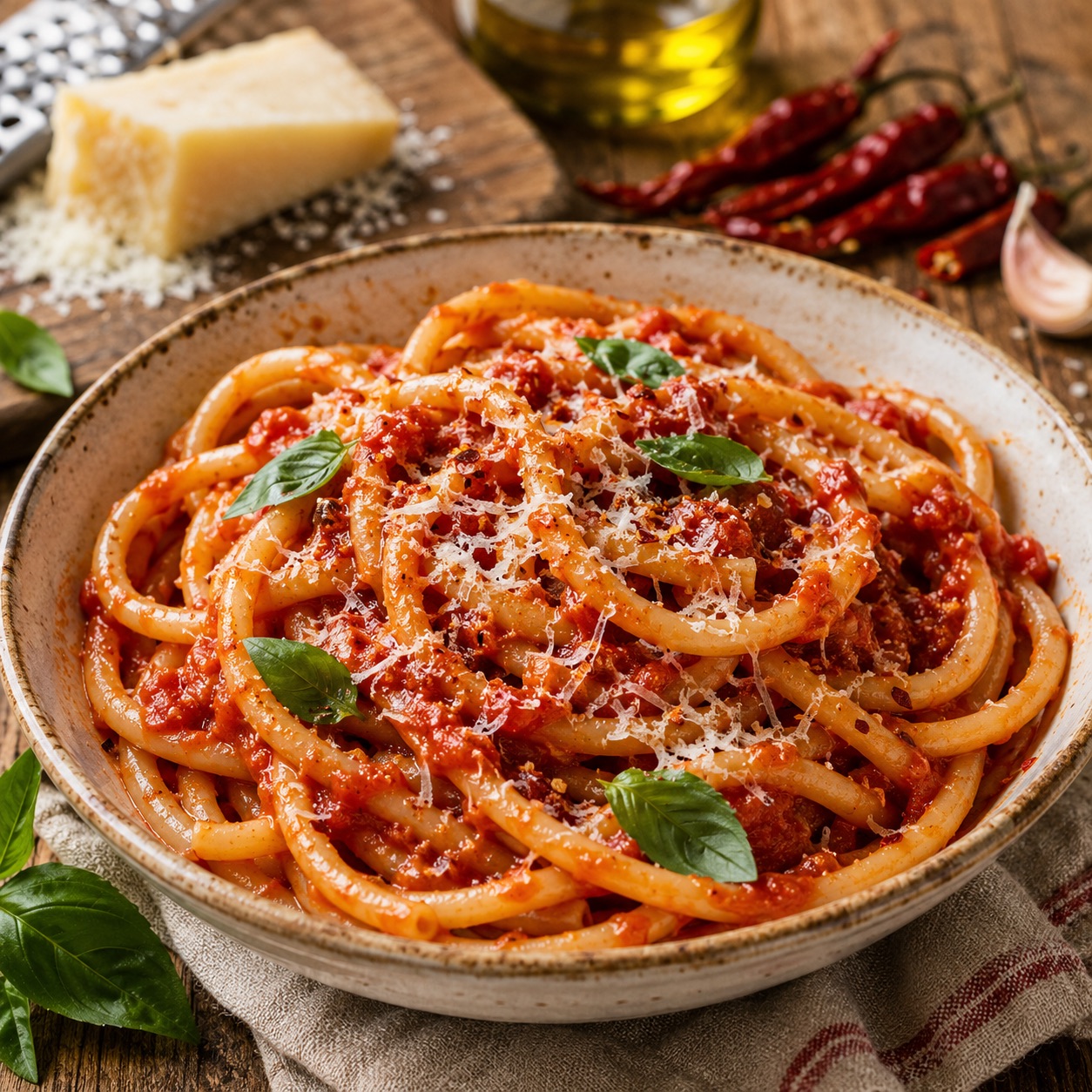
Most pasta shapes exist to hold sauce. Bucatini holds sauce and does something else: it captures sauce inside itself as you eat it, so each bite has an exterior coated with tomato and an interior reservoir of the same. The whistle — a faint, slightly embarrassing sound made when you suck up a strand — is the proof that this is working.
Pecorino Romano, not Parmesan. This is the rule for this dish and I am not flexible about it. Parmesan is milder, more complex, more forgiving. Pecorino is sharp, salty, assertive — and when it melts into the hot tomato sauce it forms almost a cream, coating every strand. That is where the dish lives. The peperoncino is there if you want it, but it is optional. This is not an arrabbiata. The heat is a guest; the pecorino is the host.
Think of it as a vegetarian amatriciana. The structure is the same — tomato, pecorino, something to cut the fat — but without the guanciale, and with basil where the black pepper would be. It is fast, it is satisfying, it is made from things you have. Twenty minutes from cold pan to table.
I make this when I want something uncomplicated and honest. It is not a refined dish. It is a correct one.
Pecorino Romano, sheep's milk, and the pasta water emulsion
Pecorino Romano is made from sheep's milk, which contains a different fatty acid profile from cow's milk — including higher concentrations of conjugated linoleic acid (CLA) and odd-chain saturated fatty acids like pentadecanoic acid (C15:0), which have emerging associations with metabolic health. Its sharper flavor and higher salt content come from a more aggressive aging process than Parmigiano, and from the character of the milk itself. The pasta water emulsion that forms when you add starchy water to the sauce is the same chemistry as in all the pasta dishes here: amylose acting as a temporary stabilizing agent that binds fat and water, creating the coating texture that makes the sauce cling.
If you add peperoncino: capsaicin — the active compound in chili peppers — activates TRPV1 receptors in the mouth and digestive tract, triggering the same neural pathway as actual heat. Beyond the familiar burning sensation, capsaicin has documented effects on thermogenesis and appetite regulation, and emerging evidence suggests anti-inflammatory activity at physiological concentrations. The salt in the pecorino shifts the perception of heat without chemically neutralizing the capsaicin — giving the palate something to do alongside it rather than suppressing it.
Find bucatini. If your store doesn't carry it, a good Italian grocery or online will. Break it if you must — into halves, not thirds. Some structural integrity is required for the whistle.
Ingredients · serves 2–3
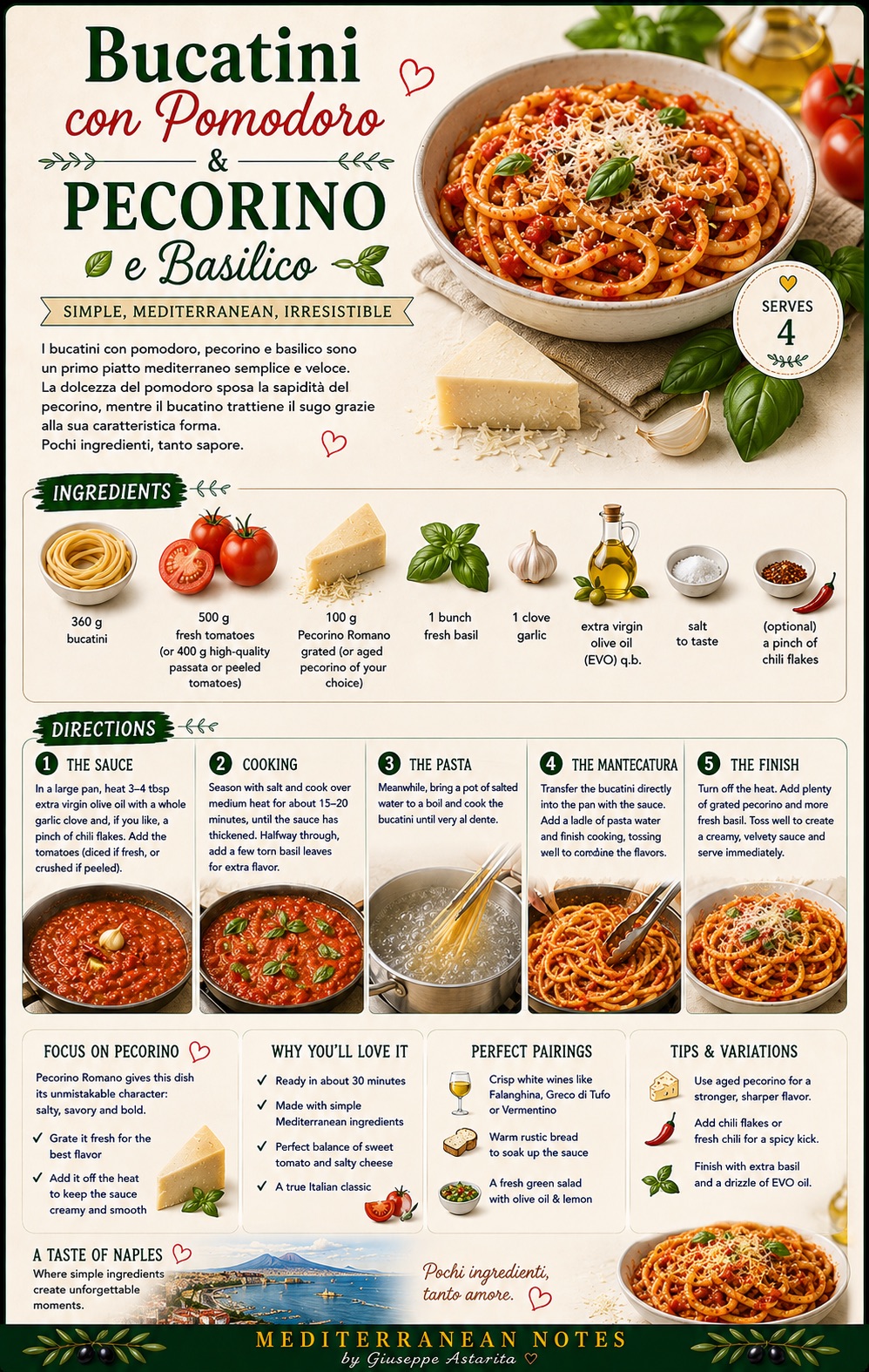
Method
Bring a large pot of generously salted water to a boil. Note: bucatini takes longer than regular pasta — account for this.
In a separate pan, warm the olive oil over medium heat. Add the onion (and peperoncino if using) and cook until the onion is soft and slightly golden, about 8 minutes.
Add the tomato sauce. Season with salt. Cook at a gentle simmer until the pasta is nearly done.
Drain the bucatini, reserving some pasta water. Return to the pot, add a generous handful of Pecorino, then add the sauce. Toss vigorously, adding pasta water as needed to create a coating sauce, not a pool.
The Pecorino should melt partially into the sauce. Add it off the heat.
Add fresh basil and black pepper. Serve immediately.
Buon appetito.