Arrosto Morto Napoletano
The braised "dead" roast
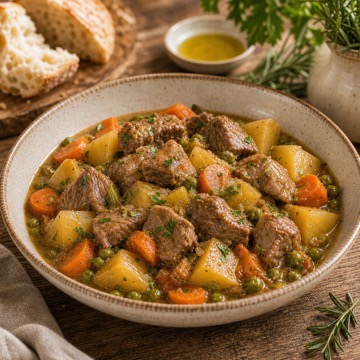
A whole cut of veal or pork, seared hard on every side, then covered tightly and left to cook at the lowest possible flame — no oven, almost no liquid, almost no movement. That stillness is what gives the dish its name. It was my aunt Giorgia's specialty — Dodà, we called her — made every Sunday at my grandmother Tittì's table.
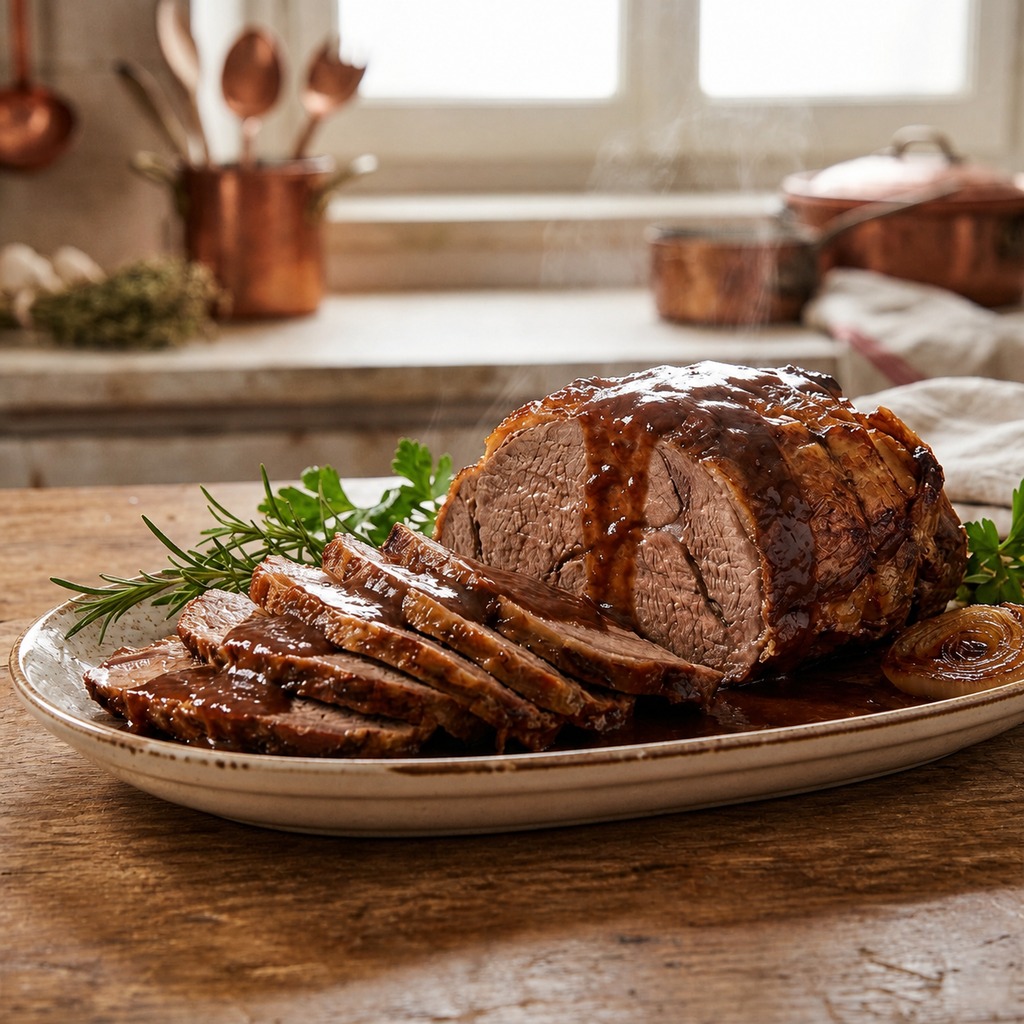
"Morto" means dead, and it sounds like an odd word to put next to a roast — but it describes the technique exactly. Once the meat is seared and the lid goes on, it sits nearly motionless in the pot for close to two hours, cooking entirely on the stovetop rather than in the oven, consuming itself slowly in its own juices with only the barest additions of liquid along the way. The stillness is the whole point: nothing is stirred, nothing is turned more than once or twice, and the meat is left alone to become tender in a way that fast cooking can't produce.
This was my aunt Giorgia's dish — Dodà to everyone in the family — and she made it on Sundays, at my grandmother Tittì's, where we went for lunch. We lived less than a block away, in the same building, in fact, just a different entrance, close enough that Sunday lunch was never really a trip anywhere. The pot would already be going low and covered on the stove by the time we arrived, and that's the memory that sticks: not the finished dish so much as walking in on the middle of it, the kitchen smelling like a roast that had been sitting there, barely moving, for an hour already.
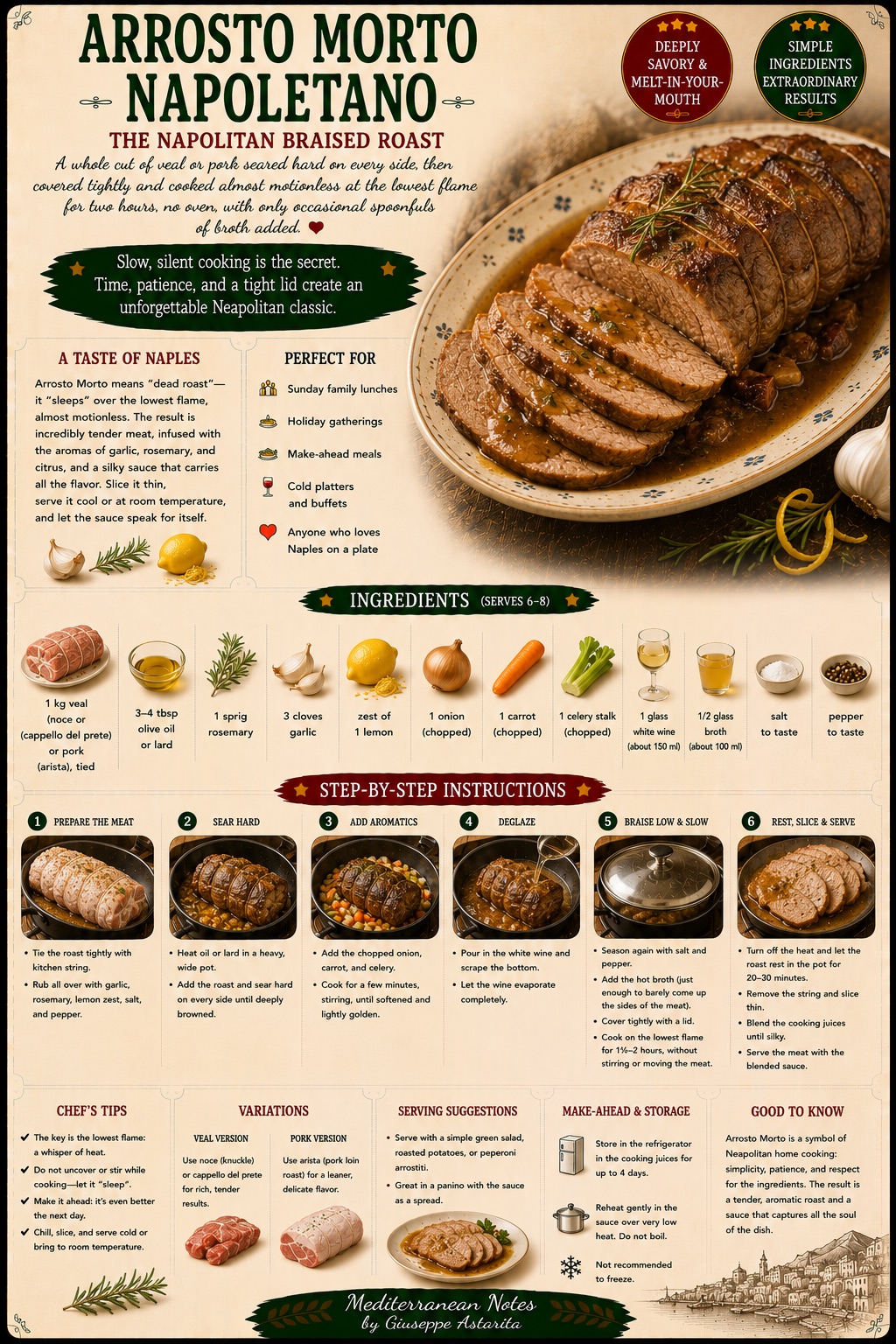
This is a technique more than a fixed recipe, and it shows up across Italy under slightly different names and cuts — but the Neapolitan version has its own habits. The cut is usually veal or beef: cappello del prete (the "priest's hat," a boneless shoulder cut), scamone — known locally as sbordone or piccione — or a lean brisket-like piece, tied tight with string before it goes anywhere near the pan. Pork works too, most often arista, the loin. Whatever the cut, it's chosen for flavor over tenderness, because the slow, sealed cooking is what does the tenderizing.
The method starts loud and ends quiet. First the meat — rubbed with rosemary, garlic, and lemon zest, sometimes tied with the sliced vegetables tucked against it — goes into a hot pan with plenty of oil, or lard in the older tradition, until every side has a dark, deeply browned crust. A glass of white wine goes in next and is left to evaporate completely at high heat, lifting the browned bits off the bottom of the pan. Only then does the pot go quiet: the heat drops to its lowest setting, the lid goes on tight, and the meat braises for an hour and a half to two hours, checked only occasionally, given a spoonful of hot broth or water at a time if the bottom starts to catch. Too much liquid at once and it stops being arrosto morto and starts being a stew.
The finished meat is left to cool slightly before it's sliced — cutting it hot causes it to fall apart rather than hold together in clean slices. The cooking juices and softened vegetables left in the pot are blended into a dense, dark sauce and poured over the top. It's a dish built for Sunday, for a table that can wait the two hours it needs, and for guests, since it's almost entirely hands-off once the initial sear is done.
The recipe
For six. A heavy pot with a tight-fitting lid matters more than any other piece of equipment here.
Related
Buon appetito.