Anguille Arrosite o Fritte
The eel that arrived before the pizza — grilled or fried, two ways to cook a noble fish
There was a pizzeria we used to go to as a family — my parents, their friends, all of us together. Before the pizza came, the anguilla arrostita arrived at the table as an appetizer. I was a child and I did not think much about it at the time, only that it was there, golden and fragrant, before everything else. I have thought about it many times since.
The eel has been part of the Campanian culinary tradition for centuries — not as an exotic ingredient but as a common one, taken from the rivers, lagoons, and coastal waters of the region and prepared in the ways that common ingredients are prepared: grilled over fire, fried in oil, simmered in sauces. In Naples and the surrounding territory the anguilla appears at festive tables, in coastal restaurants, and occasionally — as I remember clearly — as an appetizer at a pizzeria, arriving before the dough, informal and unexpected and very good.
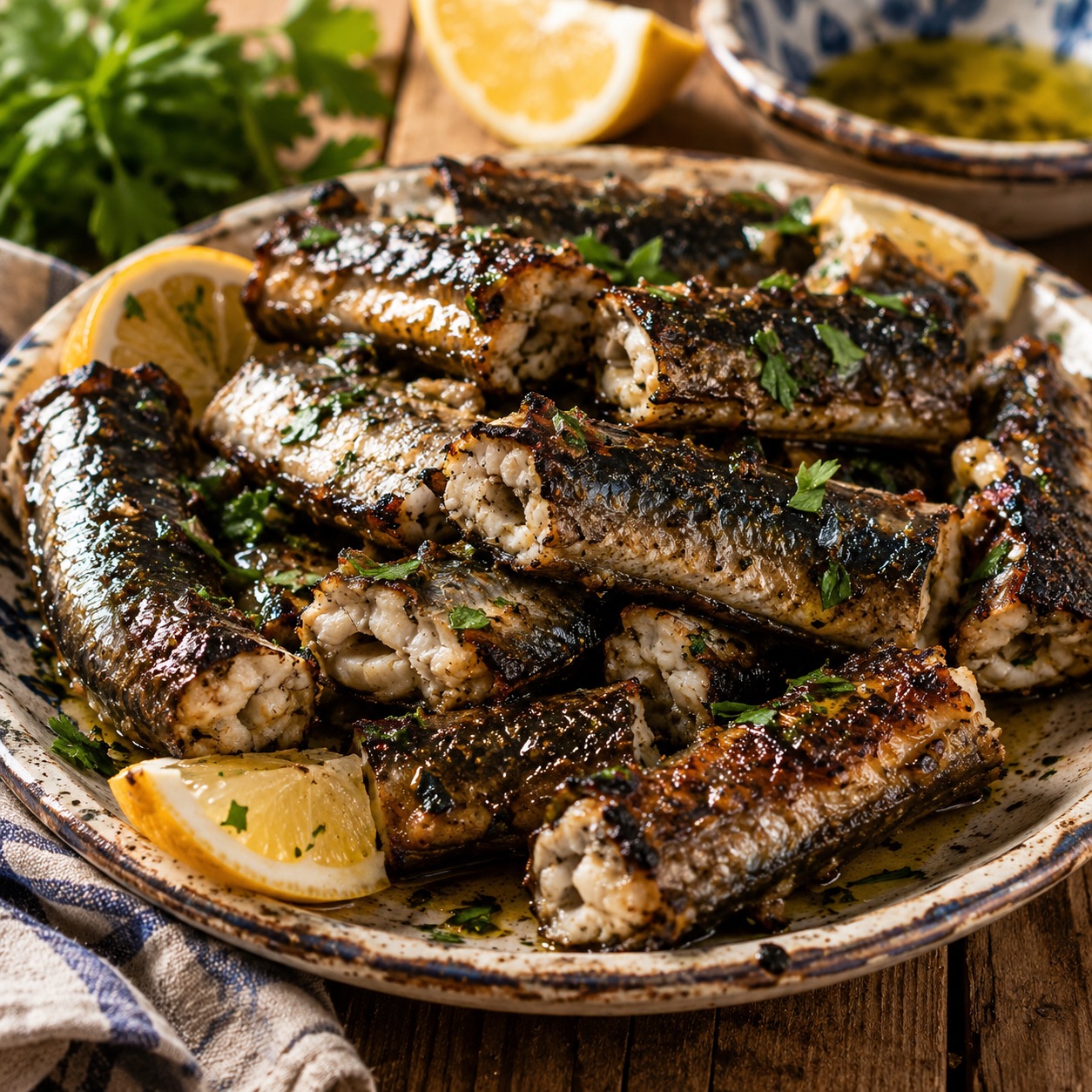
The pizzeria was the kind of place that served things beyond pizza without making a particular announcement about it. There were other dishes on the table before the pizza arrived — antipasti, fried things, whatever was available that evening — and among them, on those evenings with my parents and their friends, the grilled eel. It came on a plate, pieces of anguilla cooked over the grill until the skin was dark and slightly charred and the flesh inside was tender and rich. There was lemon. There was bread. The adults ate and talked. The pizza came later, and was also good, but the eel was first and it was the thing I remember most specifically: the smell of it from the grill, the slightly smoky, fatty, deeply flavored fish that was unlike anything else on the table.
The anguilla is not the same fish as the capitone — the large female eel of Christmas Eve tradition. The anguilla is smaller, found in rivers and lagoons, and its flesh is similarly fatty and rich but with a more delicate, less imposing flavor than the capitone. The two preparations here — grilled and fried — are the simplest approaches, the ones that let the quality of the fish speak rather than competing with it. The grilled version is the one from the pizzeria memory: seasoned with garlic, olive oil, parsley, salt and pepper, marinated briefly, and cooked over live fire until the skin has the slightly charred quality that the grill produces and cannot be replicated in a pan. The fried version is the other great Campanian approach: lightly coated in flour, dropped into very hot oil for three to four minutes until golden and crisp outside, tender inside — the same logic as the alici fritte, applied to a larger and richer fish.
Eel's high fat content — approximately 15–20% by weight — makes it exceptionally well-suited to grilling. As the eel pieces cook over direct high heat, the fat renders and bastes the flesh from within, keeping it moist and tender even as the exterior skin crisps and chars slightly. The fat also carries the fat-soluble aromatic compounds from the garlic, parsley, and olive oil marinade throughout the flesh during cooking, distributing flavor evenly rather than concentrating it only on the surface. This self-basting quality is why fatty fish like eel, mackerel, and sardines grill better than lean fish, which tend to dry out without regular external basting.
For the fried version, the flour coating serves a critical function: it forms a barrier between the hot oil and the fish surface that sets immediately on contact, trapping steam from the eel's own moisture inside the crust rather than allowing it to escape. This steam keeps the interior of the eel moist and tender while the exterior develops its crisp, golden crust through the Maillard reaction between the flour proteins and sugars and the hot oil. Without the flour coating, the eel surface would absorb oil and become greasy rather than crisp, and the interior would dry out faster than the exterior could brown.
Two preparations
The same fish, two results. Both serve 4. Use the freshest eel available — the flavor makes the difference.
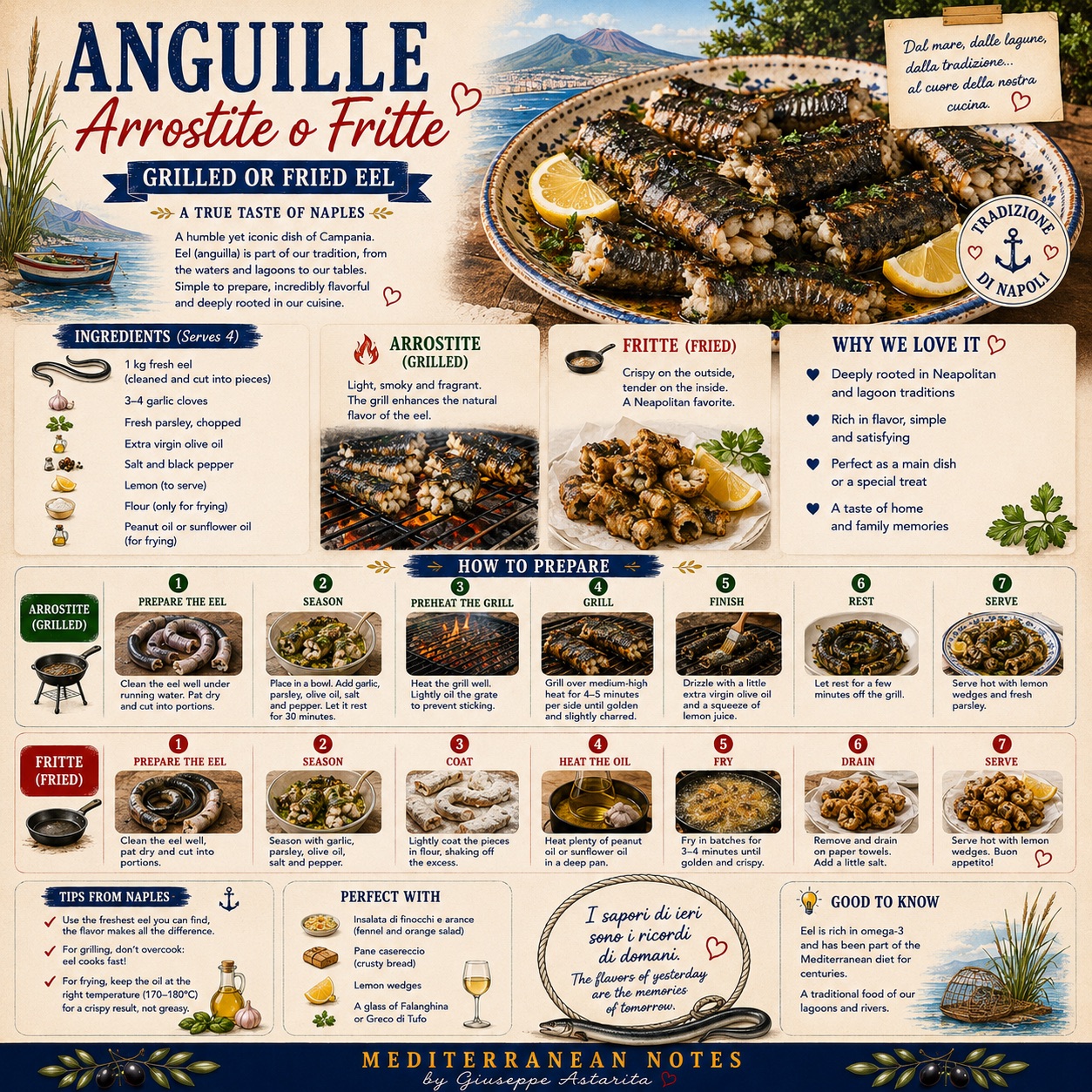
Arrostite — Grilled
Fritte — Fried
Both versions are best eaten while hot, with lemon and bread. The grilled version has a smokiness and a slightly charred edge that the fried version cannot replicate; the fried version has a crisp exterior and a more immediate richness. At a pizzeria in Campania, if you are lucky enough to find one that still serves grilled eel before the pizza, order it. Eat it while the pizza is being made. That is the correct order.
Buon appetito —
i sapori di ieri sono i ricordi di domani.