Polpette di lenticchie: the other vegetarian meatball
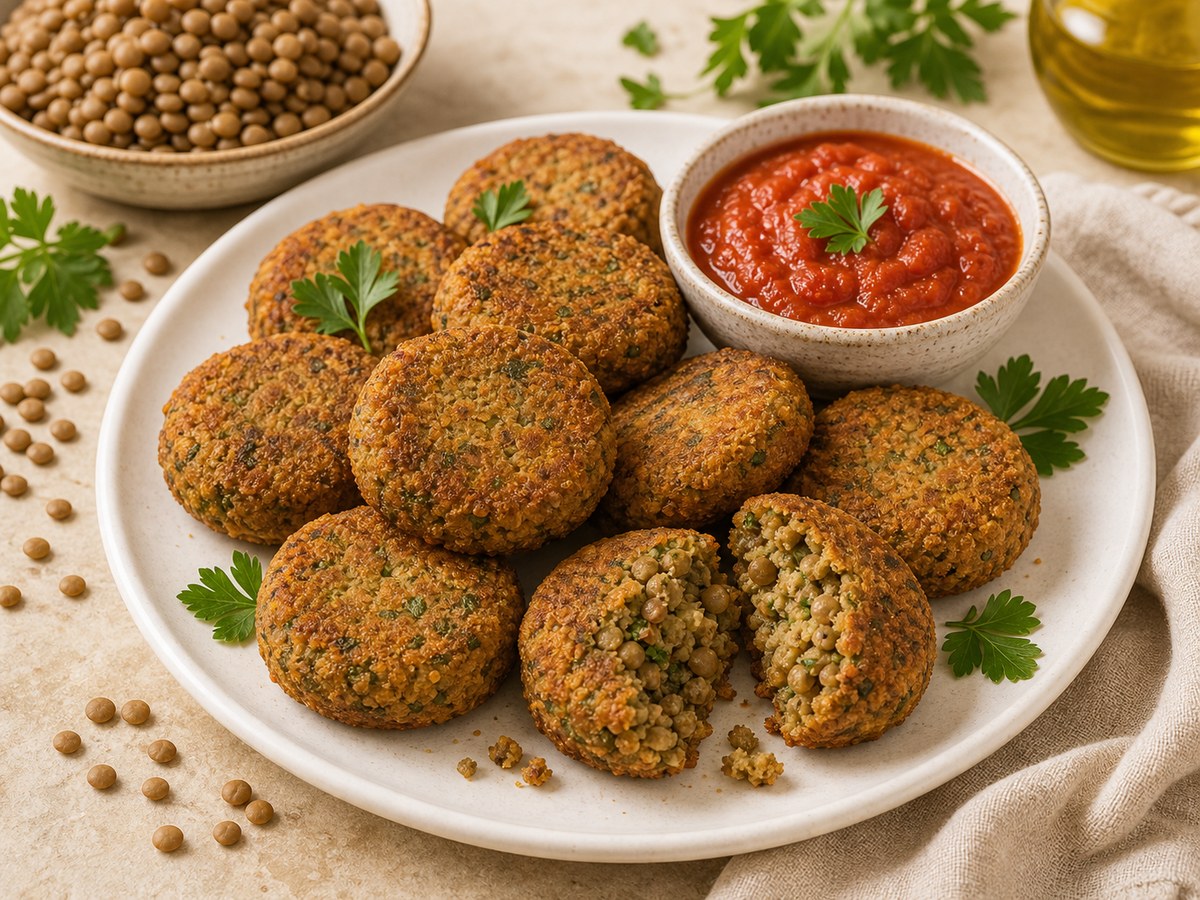
Another healthy, vegetarian variation of the Neapolitan meatball — this time built on lentils. Eat them straight from the air fryer with a salad alongside, or drop them into a simple tomato sauce and let them finish there. My mother started making them on the days when we didn't have meat, or when we simply wanted something a bit lighter.
There is a small family of dishes on this blog that did not exist in the Campanian kitchen a generation ago and a few that did — and this one sits somewhere between the two. The idea of a meatball made entirely from legumes is not new in southern Italian cooking; the tradition of stretching or replacing meat with vegetables and pulses on lean days is older than any specific recipe. What is new is the name, the form factor, and the awareness that this is a choice rather than a necessity. My mother started making polpette di lenticchie not because lentils were all that was available but because she had already made the lentil soup and the pasta e lenticchie and wanted to give the same ingredient a different shape and a different occasion.
The shape matters. A meatball occupies a different place at the table than a bowl of soup. You can put it in a child's lunchbox, pass it at a party, dip it in sauce, eat it with your fingers standing up. The lentil polpetta is one of those dishes that gets eaten before it reaches the plate — a quality it shares with the eggplant version, and with the crocchè, and with the arancini. There is something about a round, breaded, hot thing that compels immediate consumption, regardless of what it is made of.
My mother's version was practical: cooked lentils, drained very well, combined with egg, Parmesan, breadcrumbs, parsley, a little garlic, salt, pepper. Mixed, shaped, refrigerated briefly, then cooked in the oven or — now — the air fryer. The tomato sauce version, where the polpette are added to a simple sauce after cooking and simmered for a few minutes, produces something closer to the Sunday meatball in texture and experience. The plain version, crispy and golden and eaten as they come out, is its own thing entirely — a snack, an antipasto, a weeknight main with a salad.
The critical step here is the same as for the eggplant polpette: drain the lentils very, very well. Lentils cooked from dry carry a lot of residual moisture, and if that moisture is not removed before mixing, the polpette will be too soft to shape and will fall apart during cooking. Drain, then spread on paper towels and press lightly, then proceed. The food processor step — pulsing to a coarse texture rather than blending to a smooth paste — preserves enough structure in the lentil to hold together without turning into a hummus-like mass. Pulse, not blend. The texture should be rough and cohesive, not smooth.
Lentil protein, iron, and the nutritional logic of the vegetarian polpetta
The polpetta di lenticchie is one of the most nutritionally complete vegetarian dishes in this collection. Lentils provide approximately 9 g of protein per 100 g cooked — complete or near-complete in amino acid profile when combined with the egg and the Parmesan breadcrumb coating, which supply the methionine that lentils lack. The dietary fiber content is high (around 8 g per 100 g cooked), with a mix of soluble and insoluble fiber contributing to satiety, slowed glucose absorption, and prebiotic fermentation in the large intestine. Lentils are also one of the richest plant sources of folate — essential for DNA synthesis and cell division, with documented importance in pregnancy and in reducing homocysteine levels associated with cardiovascular risk. Iron content is significant (approximately 3.3 mg per 100 g cooked), and while non-heme iron has lower intrinsic bioavailability than heme iron, the parsley in this recipe contributes vitamin C which substantially improves non-heme iron absorption at the same meal. Parmigiano Reggiano adds calcium, glutamate, and conjugated linoleic acid. The breadcrumb coating, when baked or air-fried, produces the Maillard reaction crust described in the eggplant polpette post — complex aromatic compounds, no added fat beyond the drizzle of olive oil. The 30-minute refrigerator rest before cooking serves a structural purpose: it allows the starches in the cooked lentils and the breadcrumbs to partially firm up, producing a more cohesive mass that holds its shape during cooking. When served in tomato sauce, the polpette absorb lycopene from the tomato in the presence of the olive oil fat — another example of the fat-soluble carotenoid absorption principle that appears throughout this blog's recipes. These are meatballs that a metabolic nutritionist would design from scratch; they were designed instead by practical necessity and arrived at the same place.
The recipe
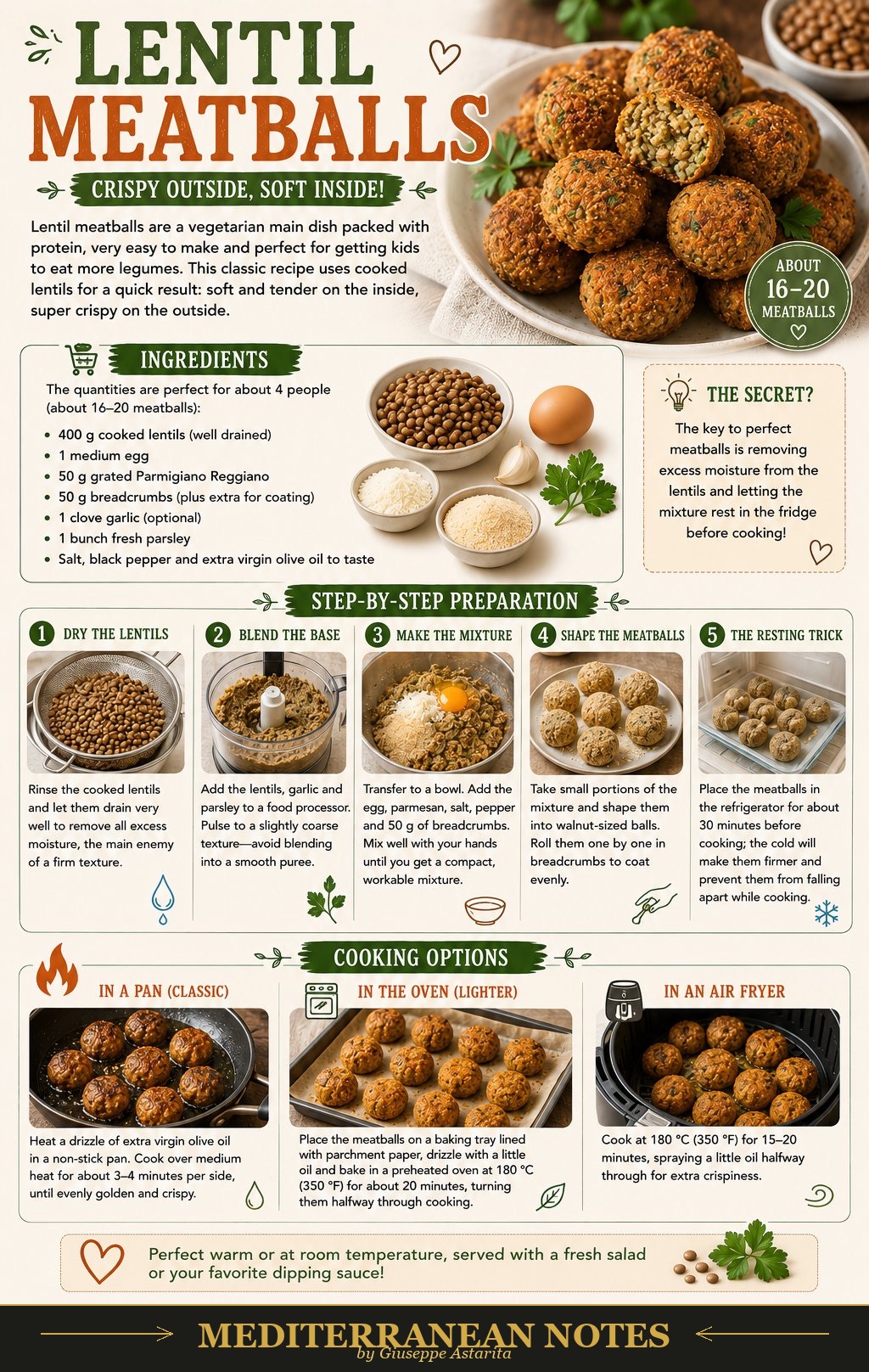
Ingredients · makes 16–20 polpette · serves 4
Method
Drain and dry the lentils thoroughly. If cooking lentils from dry, follow the method from the zuppa di lenticchie post — rinse, simmer in unsalted water until completely tender, drain. Spread the cooked lentils on paper towels and press lightly to remove as much moisture as possible. This is not optional; wet lentils produce a mixture too soft to shape. Let them sit for a few minutes after pressing.
Excess moisture is the enemy of a firm polpetta. If you are using canned lentils, rinse and drain them, then spread on paper towels for at least 10 minutes before proceeding.
Process to a coarse texture. Place the drained lentils, garlic (if using), and parsley in a food processor. Pulse — do not blend continuously — until the lentils break down to a rough, grainy texture. You want identifiable pieces remaining, not a smooth paste. Over-processing produces something that cannot hold its shape. Stop when it looks like coarse rubble, not hummus.
Make the mixture. Transfer to a bowl. Add the egg, Parmesan, breadcrumbs, salt, and pepper. Mix thoroughly with your hands until everything is evenly combined and the mixture holds together when you press a handful. It should feel compact and workable — not crumbly, not wet. If it is too soft, add breadcrumbs one spoonful at a time until it firms up.
Taste the raw mixture before shaping — this is one of the safe ones to taste. Season generously; the breadcrumb coating will mute the flavor slightly, and a well-seasoned polpetta is always better than a timid one.
Shape and coat. With damp hands, form walnut-sized balls — about 30 g each. Roll each one in breadcrumbs, pressing gently all around so the coating adheres evenly. Place on a plate or tray. Refrigerate for 30 minutes — this is the resting trick that firms them up and keeps them together during cooking. Do not skip it.
Cook. Choose your method below. All three work well — the difference is texture, time, and cleanup.
Three ways to cook them
Quickest and cleanest
Air fryer
Spray or brush with olive oil. Air fry at 180°C (350°F) for 15–20 minutes, shaking the basket or turning halfway through, until deeply golden and crispy all over. The method I use most — no cleanup, very even crust, and the polpette come out straight from the basket to the plate or directly into a waiting tomato sauce.
The everyday version
Baked in the oven
Line a baking tray with parchment. Arrange the polpette in a single layer, drizzle generously with olive oil. Bake at 180°C (350°F) for about 20 minutes, turning once halfway through. Good crust, no oil management. Best for larger quantities when the air fryer basket is not big enough.
The classic version
Pan-fried in olive oil
Heat a drizzle of olive oil in a non-stick pan over medium heat. Cook the polpette for 3–4 minutes per side, turning gently, until evenly golden and crispy all around. The crispiest crust of the three methods. Best eaten immediately — they are at their peak for about 10 minutes after cooking.
Plain or in tomato sauce — two completely different dishes
Straight from the pan / air fryer
Crispy — the snack version
The coating stays fully crisp, the lentil interior is warm and soft and earthy. Eaten like this — with a salad alongside, or just as they are at a gathering — the polpetta di lenticchie is a snack and appetizer and finger food. They disappear quickly. This is the version my mother made most often, set on the table while dinner was finishing, gone before anyone sat down.
Finished in tomato sauce
Braised — the Sunday version
After cooking, add the polpette to a simple tomato sauce — garlic, olive oil, passata, basil — and simmer gently for 5 minutes. The coating absorbs some sauce, softens slightly, and the polpetta becomes denser and more deeply flavored. This version is closer to the Sunday meat meatball in spirit: a second course, served with bread or pasta. A completely different dish built on the same base.
Of the three vegetarian meatballs in this kitchen — the eggplant, the lentil, and the potato-based crocchè — this one is the most nutritionally serious. The others are satisfying and delicious; this one is satisfying, delicious, and packs a genuinely significant amount of plant protein, fiber, iron, and folate into a small, round package that children will eat with their hands at a party without questioning what is inside. Which is, in the end, a very Italian solution to the challenge of getting vegetables and legumes onto a plate.
Buon appetito.