Pere al Vino Rosso
The winter dessert my father remembered from his childhood
My father always mentioned pears cooked in wine — not as something he made, but as a memory from his own childhood, something his family made, a proper dessert that he described as a delicacy. A Napule, anche un dolce semplice sa di storia e di cuore.
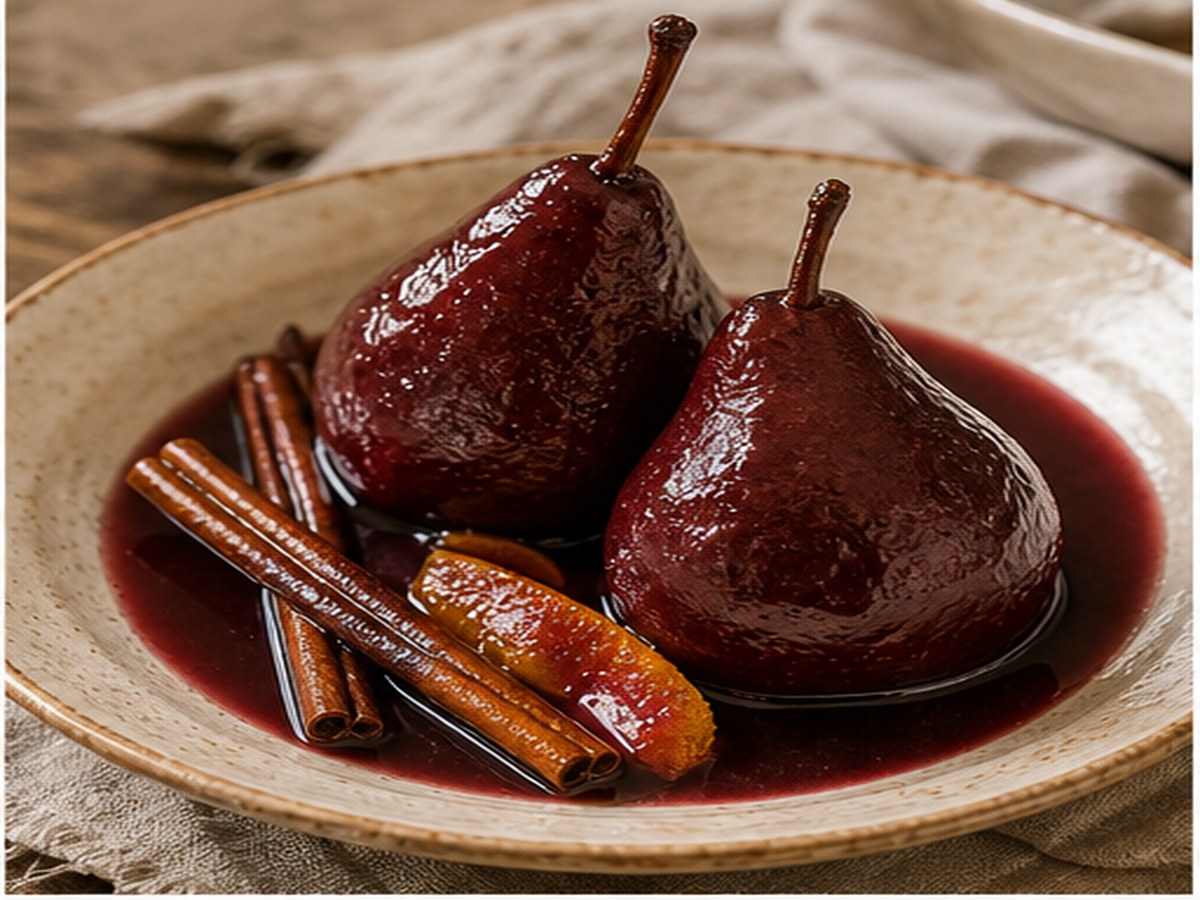
My father mentioned pears cooked in red wine the way people mention things they have not had in a long time but have not stopped thinking about. It was not a recipe he made himself — it came from further back, from his own childhood, from kitchens I never knew. He described it as something special, a winter dessert, the kind of thing that appeared on important occasions in a Neapolitan family home of his generation. The pears came out dark and fragrant and lacquered with a thick glaze that the reduced wine made, and according to him they were one of the great simple desserts of the tradition. I believed him then. Having made this recipe now several times, I believe him even more.
The preparation is ancient in the sense that every element of it — fruit poached in wine with spices and citrus peel — belongs to a culinary tradition that predates the modern era by centuries. Cooking fruit in wine was a technique of preservation as much as cooking, and the spices — cinnamon, cloves — were the flavoring agents of the medieval kitchen that survived into the Neapolitan domestic repertoire long after they became affordable and common. The result is a dessert that smells like winter and tastes like a more careful, more aromatic version of the fruit itself. The pear inside the dark coating is still recognizably a pear, but more concentrated, more complex, slightly permeated with wine and spice.
The choice of pear matters enormously. The infographic specifies Kaiser or Coscia — both firm-fleshed varieties that hold their shape through twenty to twenty-five minutes of gentle poaching without collapsing into the wine. A ripe Bartlett or Bosc works well in Massachusetts; the riper varieties that are soft when raw are wrong here, for the same reason that soft peaches are wrong for vino e percoche. The pear needs to arrive at the table as a coherent object, standing upright on the plate, stem intact — the infographic's specific instruction to leave the stem on and cut the base flat so the pear can stand is not an aesthetic choice but a structural one. A pear that falls over in the glaze is harder to plate and harder to eat with dignity.
The glaze is the part that requires attention. Once the pears are cooked and set aside, you raise the heat under the remaining wine and cook it rapidly until it thickens — ten minutes or so — into a dense, dark, slightly syrupy liquid that coats the back of a spoon. This is what gets poured over the pears at serving. It is intensely flavored, a concentration of the wine and the spices and the pear's own juices that released during cooking, and it is what transforms the dish from poached fruit into something that belongs in the dessert category properly. The infographic's nonna tip — resting the pears in the syrup after the heat is off — is the final refinement. The residual heat of the liquid continues to cook the pears gently and the flavor exchange continues. The longer they rest, the more the wine penetrates and the more unified the result.
The structural difference between a firm pear variety (Kaiser, Coscia, Bosc) and a soft ripe variety (Bartlett at peak ripeness) is primarily the degree of pectin depolymerization in the cell walls. In a firm pear, the pectin chains in the middle lamella between cells are long and intact, giving the tissue mechanical strength. During poaching, the heat softens these chains without completely breaking them, producing a cooked texture that is tender but still coherent. In a very ripe soft pear, the pectin chains have already been partially broken down by the enzyme polygalacturonase during ripening, so the tissue has less structural integrity from the start and collapses quickly when exposed to heat and the acid environment of the wine. The glaze forms when the wine is reduced at high heat: evaporation concentrates all the dissolved solids — residual sugars from the wine and the pear, the tannins and anthocyanins (pigments) from the red wine, the aromatic compounds from the spices, and the gelatin-like pectin that leached from the pear during cooking. This pectin is what gives the glaze its characteristic viscosity and its ability to coat the pear rather than running off. The dark color comes from the concentration of anthocyanins from the red wine and the Maillard-like reactions that occur at the surface during reduction. The cinnamon contributes cinnamaldehyde; the cloves contribute eugenol; together they create the specific spiced warmth of the reduced glaze that makes this smell like no other dessert.
La ricetta
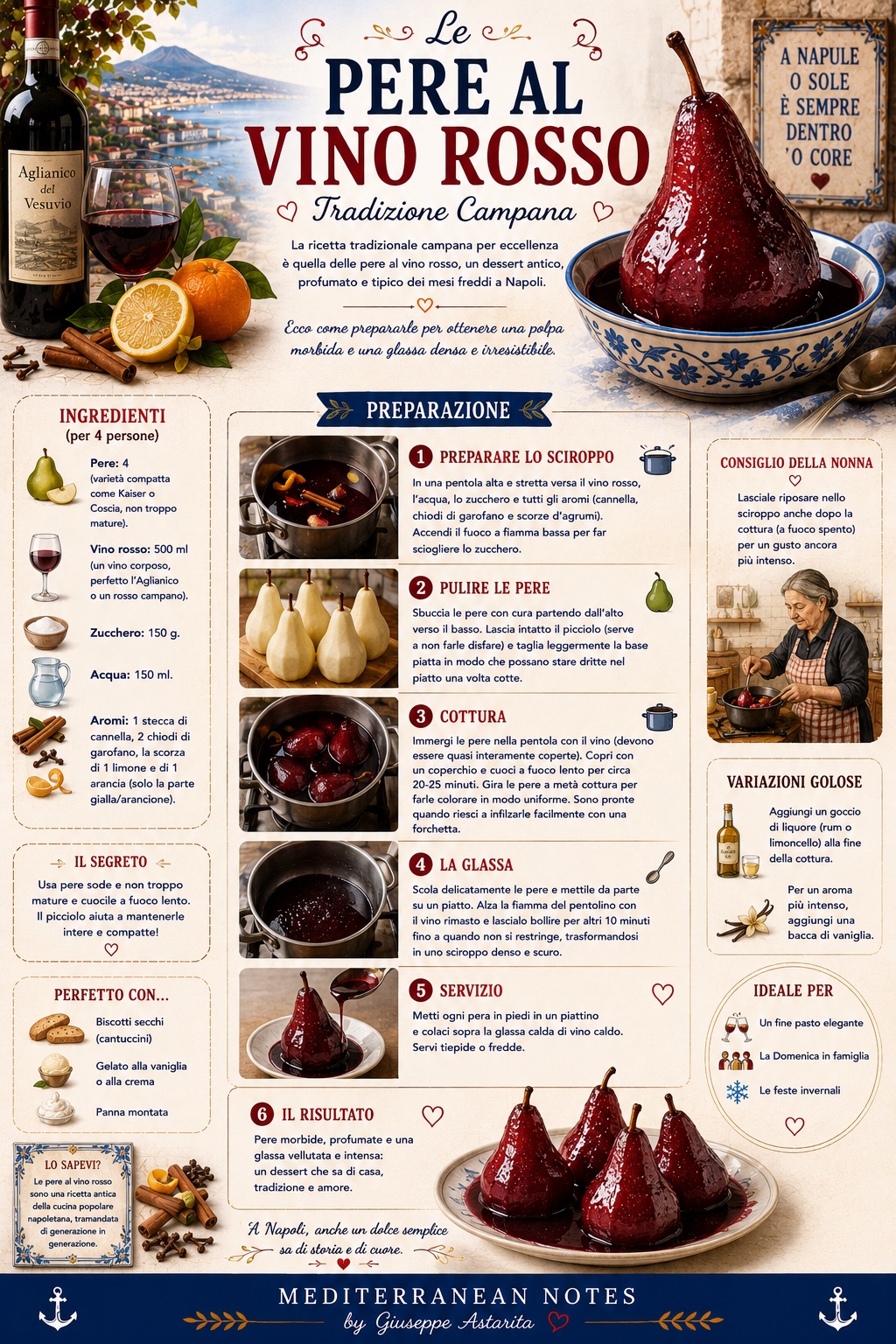
I made this for my daughters on a winter evening. Anna ate hers slowly, which for her is a sign of genuine attention to something. Carolina ate the glaze from the plate with a spoon after the pear was gone. I will make it again and think of my father, who described this dessert to me as a memory and never had the chance to eat it here.
Buon appetito — e lascia riposare nella glassa.