Macedonia di Frutta Napoletana
Fresca, profumata e irresistibile
There is no fixed rule. What is in season, cut into even pieces, dressed with lemon juice and a touch of sugar or limoncello, left to marinate in the refrigerator for thirty to sixty minutes until a small sweet lake forms at the bottom of the glass bowl. My father always had this after lunch. The syrup is the point.
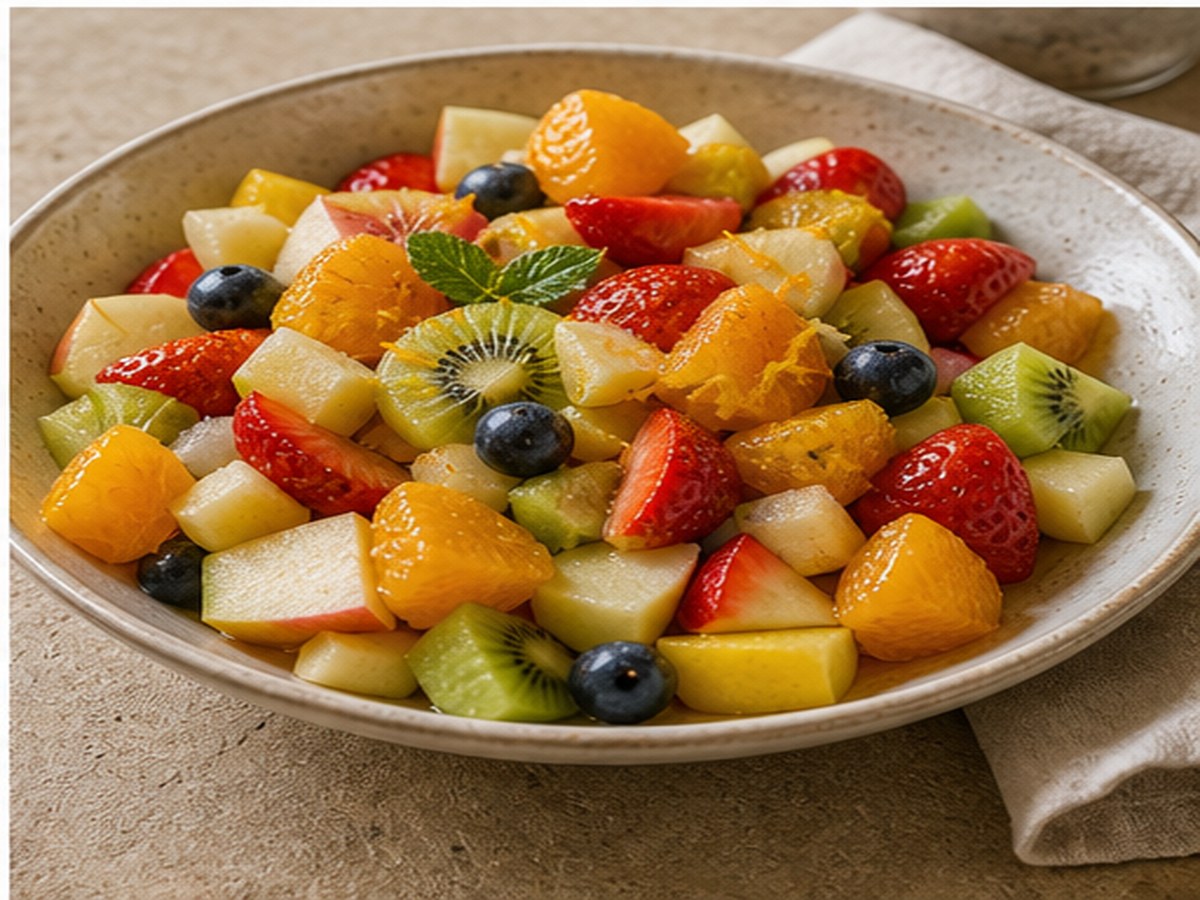
The Neapolitan macedonia is not a fruit salad in the American sense — it is a marinated preparation, and the marination is what separates it from a bowl of cut fruit. The lemon juice and sugar draw moisture from the fruit by osmosis while the acid of the lemon prevents browning and brightens the natural sweetness of each piece. After thirty to sixty minutes in the refrigerator, the fruit has released enough of its own juice to create a delicious sweet and slightly tart liquid at the bottom of the bowl — the zuppetta dolce, as some people call it — and each piece of fruit has absorbed some of the dressing and become slightly more complex than it was alone. This is the thing you are making. Not fruit with dressing on top, but fruit transformed by time and acid and sugar into something with its own character.
My father ate this after Sunday lunch, after the pasta and the secondo and whatever else my mother had made, as a light closing to a heavy meal. The lightness was part of the logic — fruit and lemon and a little limoncello after a substantial Sunday table is exactly the right amount of dessert, refreshing rather than adding to what was already a full meal. He would assemble it before sitting down for lunch, put it in the refrigerator, and bring it out at the end. By then the marination was complete and the bottom of the bowl had its syrup. Everyone got some fruit and some liquid, and the summer peaches or cherries or strawberries tasted more like themselves after thirty minutes in the dressing than they had before.
The limoncello is the Campanian touch — a splash, not a quantity, added for fragrance and depth rather than for alcohol. In some families rum performs the same role, slightly warmer in character. Both are optional; the lemon juice alone is sufficient for the correct result. The fresh mint, torn rather than cut so it releases its oils without the metallic edge that a knife gives it, is added just before serving. Do not add it during the marination — mint in a closed container for an hour produces something that smells of mint toothpaste rather than fresh garden mint.
The syrup at the bottom of the bowl forms through osmosis: the sugar and lemon juice create a higher-concentration environment outside the fruit cells, drawing water out along with dissolved sugars and aromatic compounds. After thirty to sixty minutes, the cumulative moisture release from all the fruit pieces creates the characteristic liquid pool — a mixture of fruit juice, dissolved sugar, lemon juice, and the aromatic volatiles that give each fruit its smell. This liquid is more flavorful than any of its components alone because it concentrates multiple fruit flavors together with the citric acid of the lemon. The lemon juice also prevents enzymatic browning — a reaction in which the enzyme polyphenol oxidase, released when fruit cells are cut, oxidizes phenolic compounds in the fruit to produce brown quinone pigments. Citric acid inhibits polyphenol oxidase activity and also creates a low pH environment that slows the oxidation reaction, keeping cut fruit bright and colorful through the full marination period. This is why macedonie made with lemon juice stay visually fresh after an hour while the same fruit cut without lemon would have darkened, particularly peaches and apples. The limoncello adds a small quantity of lemon-derived terpenes — primarily limonene — that amplify the citrus aromatic character of the dish without significantly changing the acid balance.
La ricetta
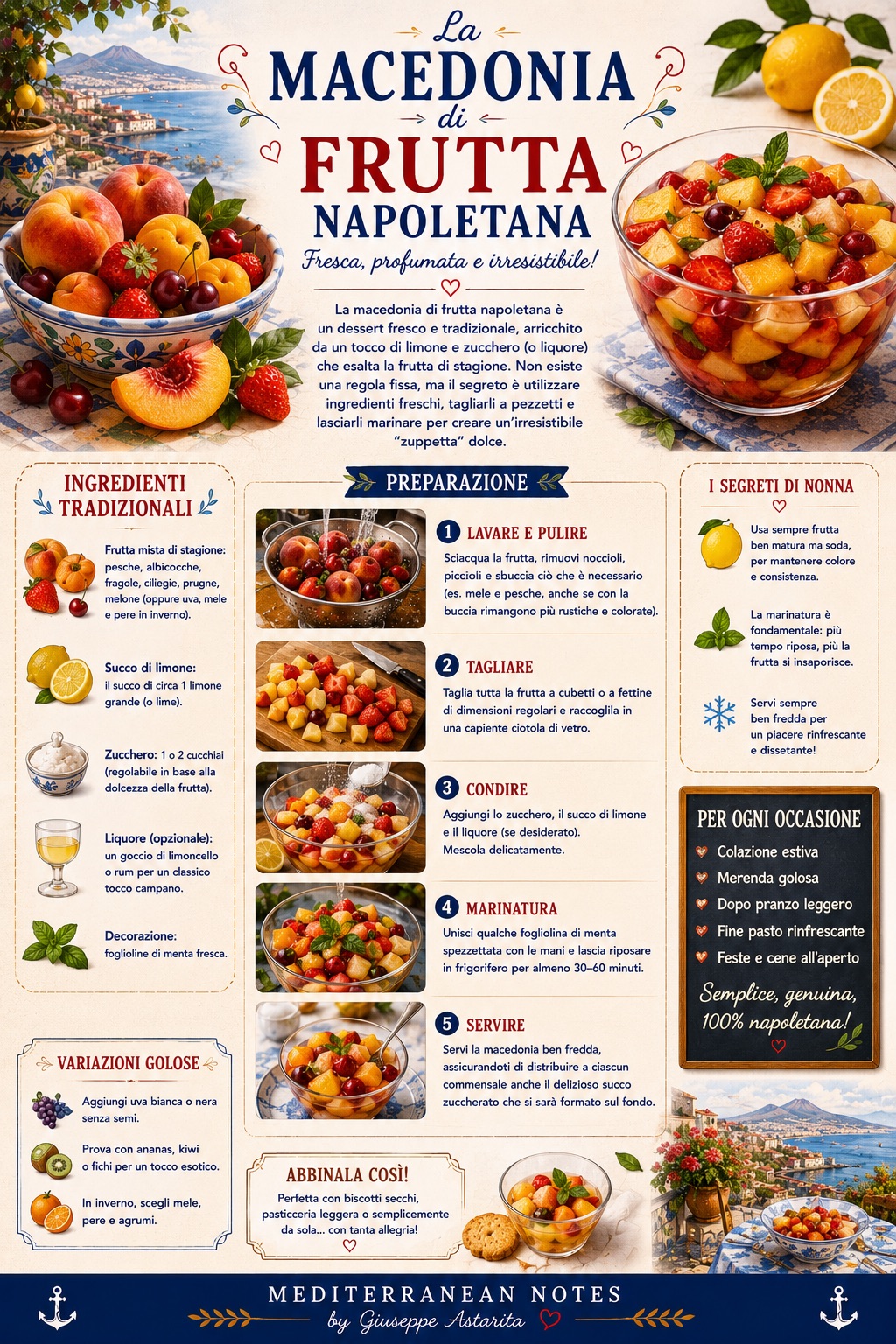
My daughters like the summer version best — peaches, strawberries, and cherries together, the syrup very pink from the strawberries and cherries. Carolina drinks the syrup directly from her bowl at the end, which is exactly what my father would have done and which I consider the correct approach.
Buon appetito — e non lasciare la zuppetta nel fondo.