Brodo Vegetale alla Napoletana
E che ci vuole! — always from scratch, never from a packet
My mother made vegetable broth in five minutes from scratch and could not understand why anyone would do otherwise. E che ci vuole! she would say — what does it even take? Te lo faccio subito subito. I'll make it right now, straightaway. She always had a small pot of it warming on a back burner when she was cooking something that needed it.
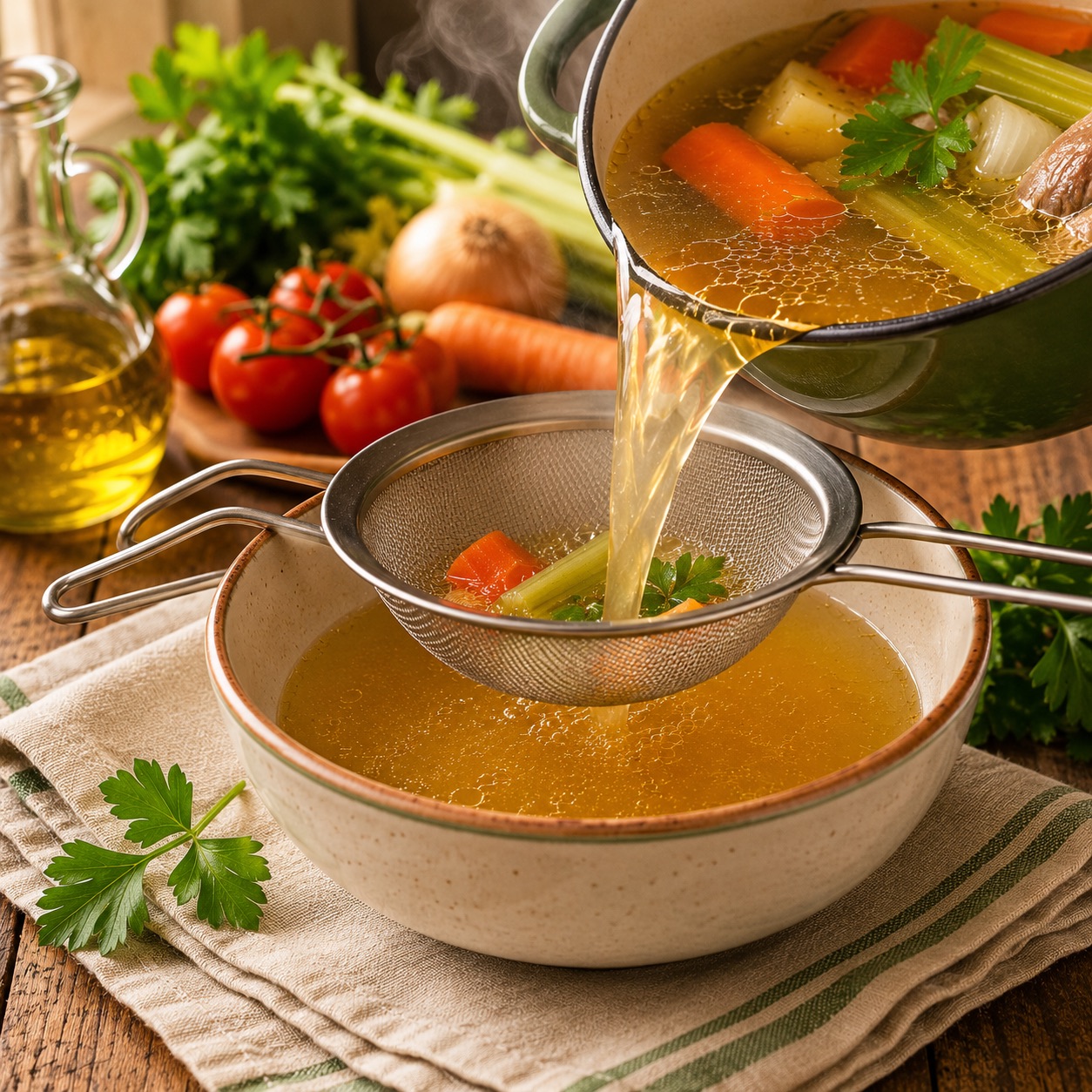
There was never a stock cube or a packet of vegetable broth in our kitchen in Caserta. This was not a principled stand against convenience products — my mother was not doctrinaire about these things. It was something closer to genuine incomprehension: why would you buy something in a packet when the thing itself takes five minutes and costs less and tastes better? E che ci vuole! — what does it even take? A carrot, a celery stalk, half an onion, a few cherry tomatoes, a bunch of parsley, water. Put them in a pot, bring to a boil, simmer for an hour. The vegetable broth was not a production. It was background infrastructure, the liquid that made other things possible, assembled without ceremony and kept ready on the back burner for when it was needed.
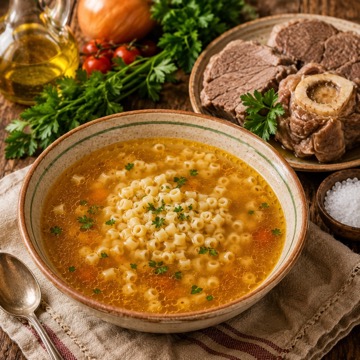
The occasions for vegetable broth in our household were specific. The most significant was illness — a cold or a fever or the kind of general unwellness that children produce regularly and that in a Neapolitan household is treated first with broth and pastina. The broth for this purpose was made lighter and more delicate than the Saturday meat broth, not because vegetable broth is medicinally superior to meat broth but because the lightness was appropriate to the circumstance and because the smell of vegetables simmering was the right smell for a child who was not well. The pastina — small pasta cooked directly in the broth — was the first solid food after a stomach illness, the transition from nothing to something, offered in a small bowl with a tiny amount of Parmigiano and the reliable feeling that things were getting better.
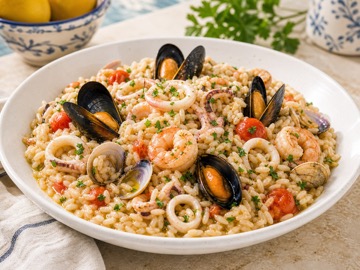
The other occasions were culinary rather than therapeutic. When my mother was making a risotto, a small pot of vegetable broth appeared on the back burner and stayed there, kept at a bare simmer, available for the ladle that would be added to the rice every two minutes for the eighteen minutes of the risotto's cooking. She never used a bouillon cube for this. The same broth served for minestrone, for cooking legumes, for any preparation that called for a flavored liquid base. It was made fresh for the occasion, or made the day before and kept in the refrigerator, or occasionally frozen in small portions. The packet was never opened because the packet was never purchased.
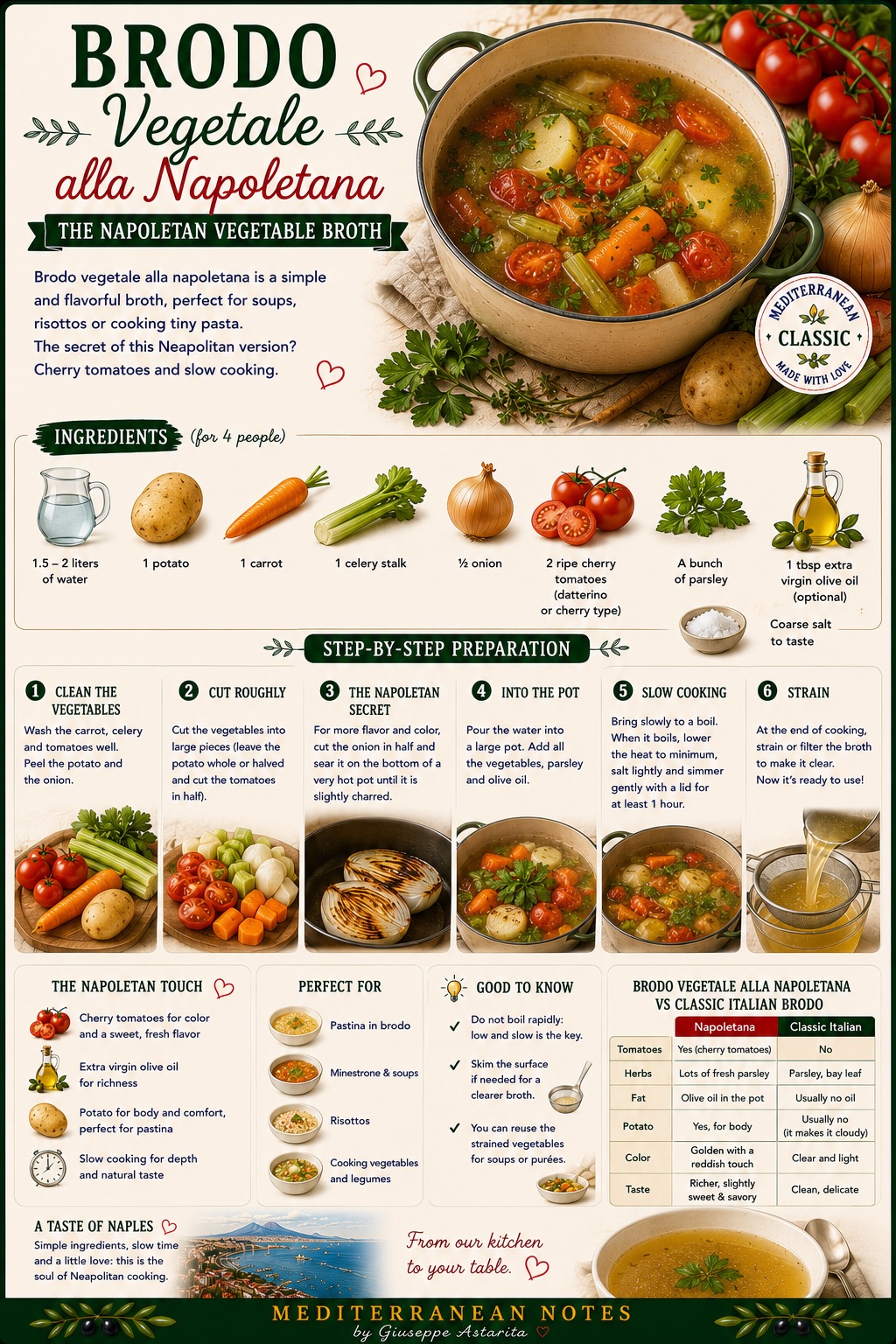
The Neapolitan vegetable broth has two specific touches that distinguish it from the standard Italian preparation. The first is the cherry tomatoes — two ripe datterino or cherry type, halved — which give the broth a faint golden-reddish color and a gentle sweetness that the standard clear broth of celery, carrot, and onion does not have. The second is the charred onion: before adding the onion to the pot, you cut it in half and place the cut surface directly on a very hot dry pan until it is slightly blackened. This charring produces Maillard reaction products — the same browning compounds that give roasted meat and toasted bread their depth — in a vegetable preparation, adding a subtle complexity and a color contribution to the broth that the raw onion would not produce. This technique is borrowed from the professional kitchen practice of adding a charred onion to long stock preparations, simplified here to a minute of direct contact with a hot pan.
La ricetta
La patata — quando sì, quando no
Unlike the meat broth — where potato is excluded for specific reasons of clarity and preservation — in the vegetable broth the potato question has a nuanced answer that depends entirely on what you are using the broth for. This is worth understanding clearly because it is genuinely useful knowledge.
Placing the cut onion on a very hot dry surface initiates the Maillard reaction between the amino acids and the reducing sugars present in the onion's outer layers. This reaction, which begins at around 140–165°C, produces hundreds of new aromatic compounds — primarily pyrazines, furans, and other heterocyclic molecules — that give browned onion its characteristic sweet, slightly caramelized, savory depth. These compounds are fat-soluble and water-soluble in different proportions, meaning some will dissolve into the broth during the simmer and contribute their complexity to the final flavor. A raw onion added to cold water and simmered for an hour produces a sulfurous, sharp onion broth; a charred onion produces a sweeter, more rounded broth without the sharp sulfurous note. The cherry tomatoes contribute two things: lycopene (which gives the reddish tint to the golden broth color) and glutamic acid (free glutamate from the naturally high glutamate content of ripe tomatoes, which raises the overall savory depth of the broth). The Neapolitan tradition of adding tomato to both meat and vegetable broth is effectively an empirical discovery of the umami-boosting function of glutamate-rich ingredients — the same reason that Parmesan rind, anchovies, and dried mushrooms are added to broths in other culinary traditions. The olive oil, when included, serves two purposes: it provides a fat phase that carries fat-soluble aromatic compounds from the vegetables into the liquid, increasing flavor complexity, and it adds a gentle richness that the standard oil-free vegetable broth lacks.
The five-minutes claim requires a small clarification. The preparation of the vegetables — washing, peeling, rough cutting, charring the onion — takes five minutes. The cooking takes an hour. What my mother meant by subito subito was that the work was immediate and minimal, that nothing about making vegetable broth required planning or effort or special equipment. The hour of simmering happened on its own while she did other things. This is still true. You put the pot on, you walk away, you come back an hour later and it is done. The active time is five minutes. The rest is patience, which costs nothing.
In Massachusetts I keep a batch of vegetable broth in the refrigerator most of the time in winter. The packaged version is available and convenient and I understand why people use it. I do not. Not because of any culinary purism but because the five-minute preparation is genuinely easy and the result is genuinely better, and because the smell of vegetables simmering in a pot is a useful smell to have in the kitchen on a weekday afternoon. It is a small and reliable pleasure. E che ci vuole.
Buon brodo — e lo fai tu, dal principio.